



Marya Hornbacher came out of rehab in her mid-20s not knowing how to make dinner. She could earn a graduate degree, but she couldn’t change a tire or make a doctor’s appointment. She’d been drinking and using since her early teens, and by the time sobriety arrived, basic life skills were largely theoretical.
What she built from that point forward is more than something. New York Times bestselling author. Pulitzer Prize shortlisted journalist. Award-winning writer across fiction, nonfiction, memoir, and journalism. And since 2022, a solo traveler living out of a camper, logging tens of thousands of miles across America, doing the kind of deep, ground-level reporting that doesn’t fly in and fly out.
This conversation covers the full arc: the hard fall, the night her BAC hit 0.45, the moment she realized she didn’t need alcohol to dance, the myth of the tortured creative she’s spent years dismantling, and what it looks like to build a life around craft and purpose. Marya is sharp, direct, funny, and clear-eyed in a way that only comes from having earned it.
Show Notes
[00:18] Introduction: Who Is Marya Hornbacher?
Award-winning journalist and New York Times bestselling author with 25+ years of work across fiction, nonfiction, journalism, and memoir
Shortlisted for the Pulitzer Prize; has written and taught extensively throughout her career
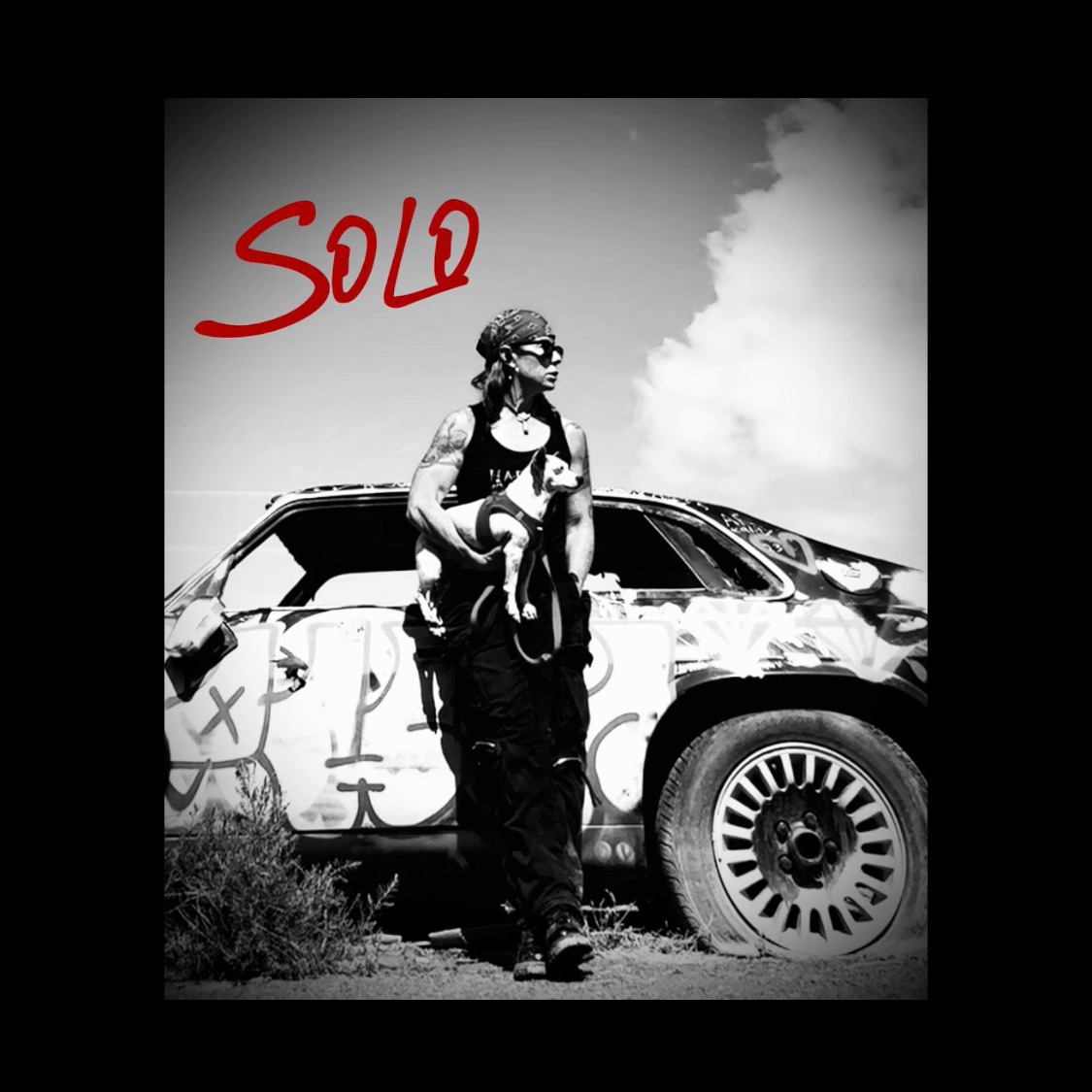
Since 2022, has been living out of a camper and traveling across America, writing a weekly Substack called Going Solo at the End of the World
Travels with her dog, Luna Moonbat
Key Insight: “She came out of rehab in spring, her words, like a snake with a brand new skin, too raw, too tender, uncalloused of belly, electric with nerves.” — Josh Woll, reading from Marya’s own writing
[03:01] The Hard Fall: Life Before Sobriety
Marya started young and describes going down “hard and fast” — no gradual descent
Got court-ordered to a 12-step program in her early teens; it didn’t land
Became a runaway, got into boarding school, tried college, kept losing opportunities to addiction
By her own account: “I kept being like, if I stop doing this, I will be able to think my way through this.” It didn’t work that way
Key Insight: “I took a drink and was face-first in the muck.” — Marya Hornbacher
[06:02] Rock Bottom: The Night That Led to Rehab
In California in her mid-20s, family intervened — took her credit cards, her job, cleared out her apartment
Got picked up by police, charged with resisting arrest and assaulting an officer; ended up in a psych ward
BAC was 0.45 when she was admitted — a level that is, by any medical standard, life-threatening
Given two choices by a social worker: Duluth Women’s Prison or rehab. She tried to choose a third option. There wasn’t one
Key Insight: “I got slapped into rehab and it saved my life, for sure it did.” — Marya Hornbacher
[08:45] New Orleans: The First Free Dance
Barely sober, she went to New Orleans with a fiancé she could hardly remember agreeing to marry
He wouldn’t dance. She went out on the floor anyway, in her mother’s white dress, with a Zydeco band playing
Picked up a glass of wine out of habit, paused, and set it down
That moment clarified something about who she was and what she didn’t need anymore
Key Insight: “I don’t need permission. I don’t need alcohol. I don’t need him. I don’t need to do anything except dance. And I would say that if I have a policy in my life, that’s about it right there.” — Marya Hornbacher
[10:00] Building a Life: Sobriety as Foundation
Early sobriety wasn’t only about stopping substances — it was about figuring out how to be a person
Tried the conventional path: marriage, house, hosting parties, what she calls being “a corporate trophy wife for a while”
Eventually realized her values weren’t about money, titles, or diamond rings — they were about people, the world, and doing what she believed she was here to do
Sobriety gave her the clarity to act in line with those values: “How would I have done any of that drinking or high?”
Key Insight: “Sobriety was part and parcel of how do I become the person that I don’t see in the world. I wanted to be the change. And whether I am or not isn’t actually the point. It’s that I can be, and I’m not inhibiting my ability to be.” — Marya Hornbacher
[14:50] Four Years on the Road: Going Solo at the End of the World
In 2022, Marya bought a camper, shed most of what she owned, and started traveling America full-time
Part practical: she couldn’t afford rent and keep writing. Eliminating housing overhead made continued work possible
Part journalistic: she’d grown tired of “parachute journalism” — flying in, getting the quote, flying back to somewhere fancy
Her method is to show up, come back the next day, and the day after that, until someone in a dive bar stops seeing her as a stranger
Has spent the most time in red states and the Southeast, in places that rarely make the news cycle
Key Insight: “What I do best is sit down in a dive bar and then come back tomorrow and then come back the next day, until they’re like, who is the weird old broad in the corner, and someone comes and tells me what their town is, what they’re doing there, what they care about. That’s the road trip, really. It’s not a trip.” — Marya Hornbacher
[18:22] The Mad Artist Myth — and Why It’s Garbage
The idea of the brilliant, drunken creative has always struck Marya as “exhausting and nonsensical”
Her best work came from the 10 minutes between waking up and starting to drink — that window widened as sobriety took hold
She’s watched readers who were drawn to her early work chase the “young, disastrous train wreck girl” image — she’s determined to outlive it
Her position: the driving force of creativity is craft and the creative imperative, not trauma, not substances
Key Insight: “You do not have to be young and fragile to write powerfully. You have to be a powerful writer.” — Marya Hornbacher
[22:00] The Craft of Truth-Telling, Writing Practice, and What’s Next
A core principle she teaches: the hotter the material, the cooler the language has to be — precise, clear writing serves hard truths better than overwrought prose
Her view of writing as service: “The writers I read are doing a service to me. They’re seeing the world in a way I don’t see it. And I want to be able to provide that same service.”
Daily practice: roughly three solid hours of generative work, usually late in the day after assignments are done — she notes 15 minutes also counts if that’s what you’ve got
Her book, coming out spring 2027, adds to a long tradition of American road narratives — told from the perspective of a woman who went on the road because she was fleeing a predator and was broke, and what it took to do it without fear
Key Insight: “To describe something or observe something with precision and care is a way of loving. And this is my way of loving the world, is to observe it as clearly and as openly as I can. And that is — I truly believe — what I’m here to do.” — Marya Hornbacher
Key Quotes
“I took a drink and was face first in the muck.” — Marya Hornbacher
“I don’t need permission. I don’t need alcohol. I don’t need to do anything except dance. And I would say that if I have a policy in my life, that’s about it right there.” — Marya Hornbacher
“The hotter the material, the cooler the language has to be.” — Marya Hornbacher
“You do not have to be young and fragile to write powerfully. You have to be a powerful writer.” — Marya Hornbacher
“To describe something or observe something with precision and care is a way of loving. And this is my way of loving the world, is to observe it as clearly and as openly as I can.” — Marya Hornbacher
Resources Mentioned
Wasted by Marya Hornbacher — her landmark memoir (referenced by listeners in the live Q&A)
Going Solo at the End of the World — Marya’s weekly Substack, dispatches from the road
Her upcoming book on solo life on the American road (coming spring 2027)
Where to Find Marya Hornbacher
Website: maryahornbacher.com
Instagram: https://instagram.com/marya.hornbacher
A Word Before You Go
This conversation touched something I keep coming back to with this show. The creative life doesn’t require chaos to be real. It doesn’t need substances to have weight. What it needs is the willingness to show up to the work, day after day, with as much clarity as you can bring.
Marya has been doing that for 25+ years. She’s done it broke, on the road, in dive bars, in camper parks, through hard things she didn’t ask for. And she’s produced some of the most precise, alive writing working today.
If something in this conversation stirred something in you — if you’re wondering what your work could look like by changing your relationship with alcohol — let’s talk.
A free call, no pressure, just a conversation about where you are and what’s possible.
Thank You
A heartfelt thank you to Melinda Elena Lloyd 🌀, Noelle Richards, Joelle, Flora Acosta, everyone who joined us live for this conversation, and to Marya Hornbacher for her extraordinary clarity and honesty. Your presence and engagement make these conversations possible.


