


✨Weekly Insight
Replacing alcohol with something else isn’t just about finding a substitute.
It’s about understanding what you were actually reaching for.
That evening drink wasn’t really about the alcohol. It was about the exhale. The permission to stop performing. The signal that work is over and you can finally soften.
When you remove alcohol, that need doesn’t disappear — it just becomes visible.
Most people panic at this point. They search for “healthy replacements” and end up with a cabinet full of fancy teas they never drink and a meditation app collecting dust. Because they’re trying to replace the liquid, not the function.
The real question isn’t “what can I drink instead?” It’s “what was I actually trying to accomplish?”
Relief. Transition. Permission to recover.
When you name the real need, you can meet it directly. A walk that marks the end of your workday. Ten minutes of stillness before you shift into evening mode. A ritual that signals: this part of the day is over.
The difference is ownership. You’re no longer outsourcing your ability to decompress to a substance that stops working the moment it wears off. You’re building capacity to create your own reset — one that’s reliable, sustainable, and actually restores you.
That’s not replacing drinking. That’s reclaiming the ability to come home to yourself.
🧘Guided Meditations
Sitting With Difficult Emotions
A practice for creating space between feeling and reaction
Most of us have been taught the same response to difficult emotions: fix them, avoid them, or numb them out.
Anxiety shows up? Distract yourself. Sadness arrives? Push through it. Craving hits? Reach for something—anything—to make it stop.
But what if the problem isn’t the emotion itself? What if it’s our relationship with it?
This month’s guided meditation is about learning to stay when everything in you wants to run. It’s about rewiring the survival mechanism that says discomfort equals danger, and discovering that you can be with difficult feelings without being controlled by them.
What you’ll practice:
Locating emotions in your body instead of getting lost in mental stories
Creating space between what you feel and how you react
Using breath to send compassion instead of resistance
Sitting with discomfort for long enough that it starts to shift
This isn’t a quick fix or a relaxation exercise. It’s 15 minutes of actual practice—the kind that builds the muscle to pause before pouring the drink, sending the angry text, or reaching for the familiar escape.
The gap between stimulus and response? That’s where your power lives.

Guided meditations are released monthly for paid subscribers. Each one addresses real challenges of building sustainable sobriety and creative practice—cravings, overwhelm, self-doubt, and learning to stay present even when it’s hard.
🎙️Clear Conversations: Creative Minds in Sobriety
This past week, I sat down with Professor Sam Illingworth, creator of “Slow AI,” who got sober on December 22nd, 2007—after a blackout at his best friend’s 22nd birthday party left him in a hospital bed with what he thought were heart palpitations. The doctor told him: “Don’t drink for a month and see what happens.” That month became 18 years.
In his early twenties, Sam was the extrovert’s extrovert—but he was also blacking out constantly. Waking up with no memory of the night before. Getting mugged while drunk and not remembering any of it. Jumping off 30-meter cliffs in Croatia without checking the water below. He became “the clown and the fool and the joker”—a character people expected, a version of himself that wasn’t true.
Here’s the thing: Sam was excelling. He finished top of his year at university. Edited the newspaper. Ran a radio station. Played squash. He was productive. He was functioning.
But he wasn’t living.
After he quit drinking, everything changed. He became president of the Theatre Society. Went to Japan on a scholarship to study the intersections of science and theatre. Started performing poetry publicly—work he says he “wouldn’t have been able to do any of that if I had still been drinking.” Today he’s a Full Professor at Edinburgh Napier University, founder of Consilience (the world’s first peer-reviewed science and poetry journal), and runs a Substack with over 6,000 subscribers, challenging how we think about AI.
When I asked him how sobriety increased his creativity, he gave me two words: sharpness and fearlessness.
Here’s what he told me:
“You can function, right? You can function. Because you’re good at it and you can kind of do it in your sleep, but you’re doing yourself a disservice because that’s all you’re doing. You’re not living. You’re just functioning.”
Sam now wakes at 5 AM every morning thinking, “The day is going to be good.” He lives in the hills outside Edinburgh. Runs. Writes. And every night before bed, he goes through the 300 newsletters he subscribes to, leaving meaningful comments on most of them. That’s his routine. That’s how he goes to sleep. Because he loves community—”that’s what my entire research is around and like what I’m about as well.”
His work with Slow AI asks the question most people aren’t asking:
“We’re using AI to accelerate output, but why the hell are we doing that, man? This is a tool. We should be using AI to free up time for ourselves so that we can have real human connections with other humans rather than just accelerate towards this meaningless output.”
Sobriety doesn’t just give you back your mornings. It gives you the sharpness to think clearly and the fearlessness to step outside the roles that drinking locked you into. It moves you from functioning—doing things in your sleep because you’re good at them—to actually living, building work that matters in the spaces between disciplines where neither science nor art alone holds all the answers.
Sam’s capacity to live didn’t just grow when he got sober. It “exponentially grew.” And 18 years later, he’s still building—still teaching, still writing, still showing up at 5 AM ready for whatever the day brings.
You can listen on Spotify and Apple Podcasts as well:
My Next Guest on🎙️Clear Conversations
Episode 036 with Paul Overton on January 22nd at 2:00p EST
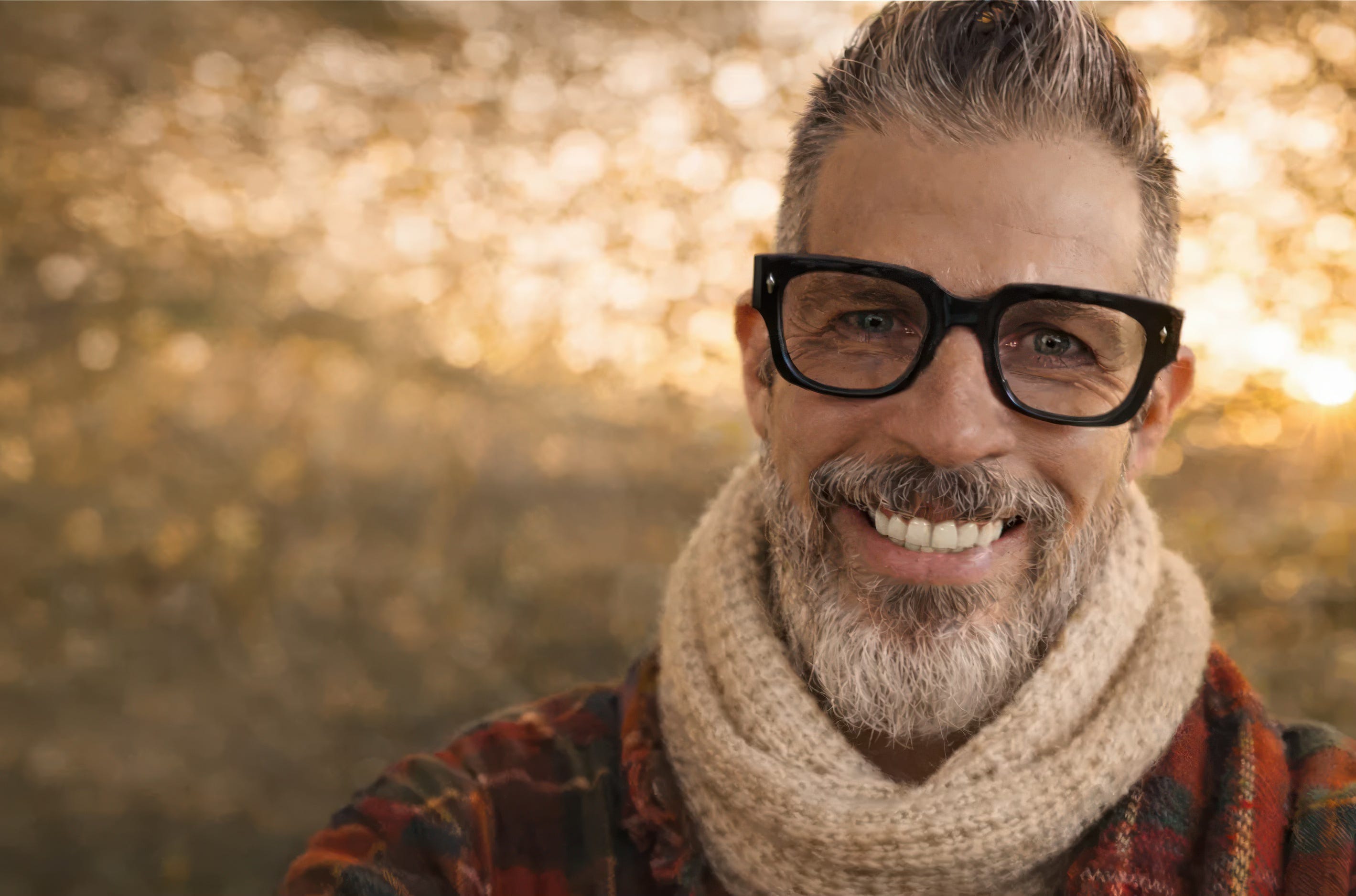
This week I'm sitting down with Paul Overton, a men's group facilitator and Certified Trauma Support Specialist who's been navigating sobriety for 27 years—and whose path includes something we don't talk about enough in recovery spaces.
Paul's journey led him to therapeutic psychedelic work in his late 40s and early 50s, using these experiences alongside EMDR therapy to clear trauma, shame, and grief that alcohol had been covering up for decades. No recreational use. No habit formation. Just deliberate healing work, spaced years apart, treating these substances as medicine rather than escape.
Paul's building something rare in men's work: spaces where men learn to show up without armor, stay present when it's uncomfortable, and practice the kind of steady, regulated connection that most of us never learned was possible.
If you've ever felt the gap between sobriety dogma and actual healing, or wondered what recovery looks like when it's about integration rather than abstinence alone, this conversation will matter.
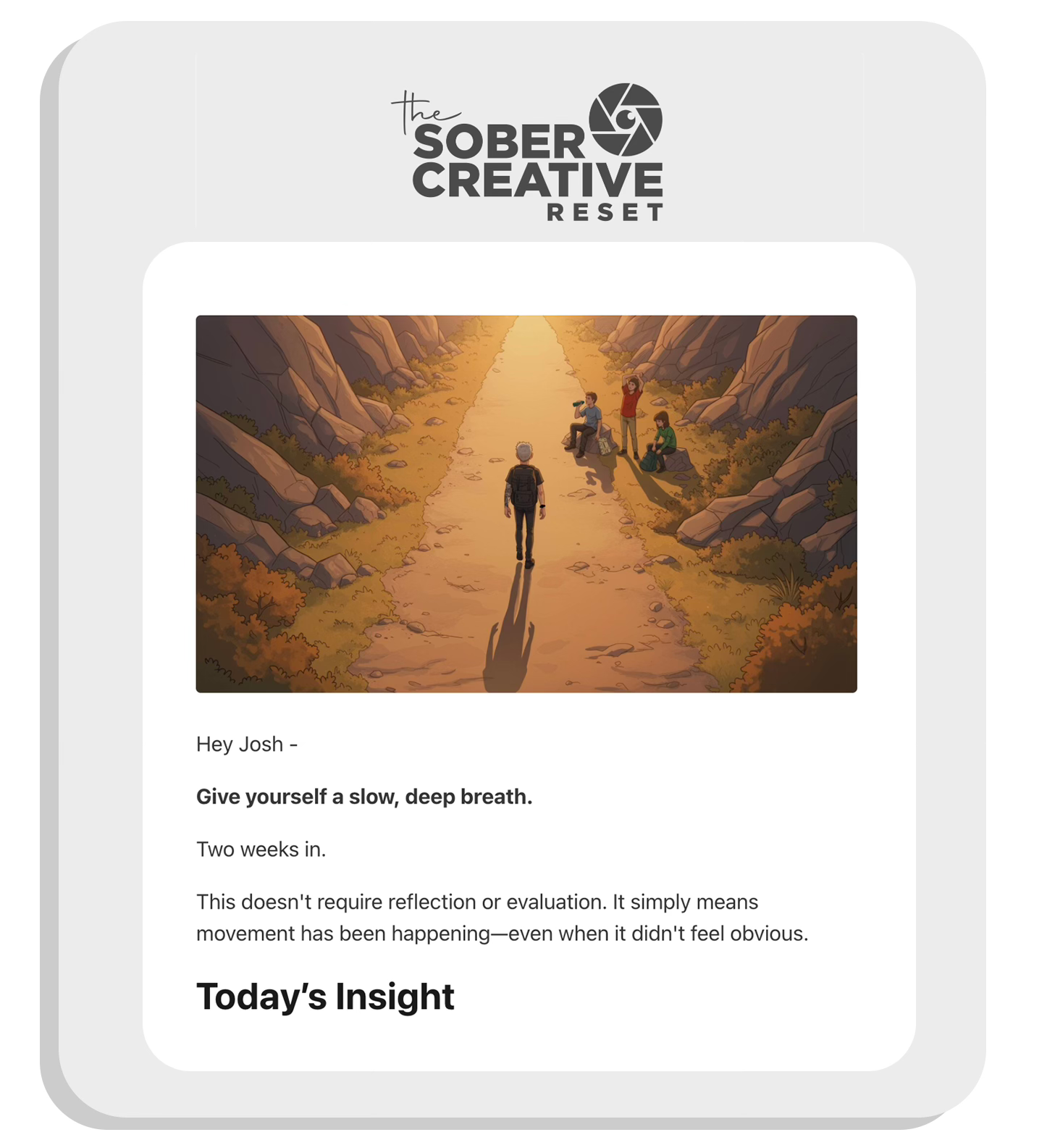
🏔️ January Reset
We have just reached the halfway point through the first-ever Sober Creative Reset!
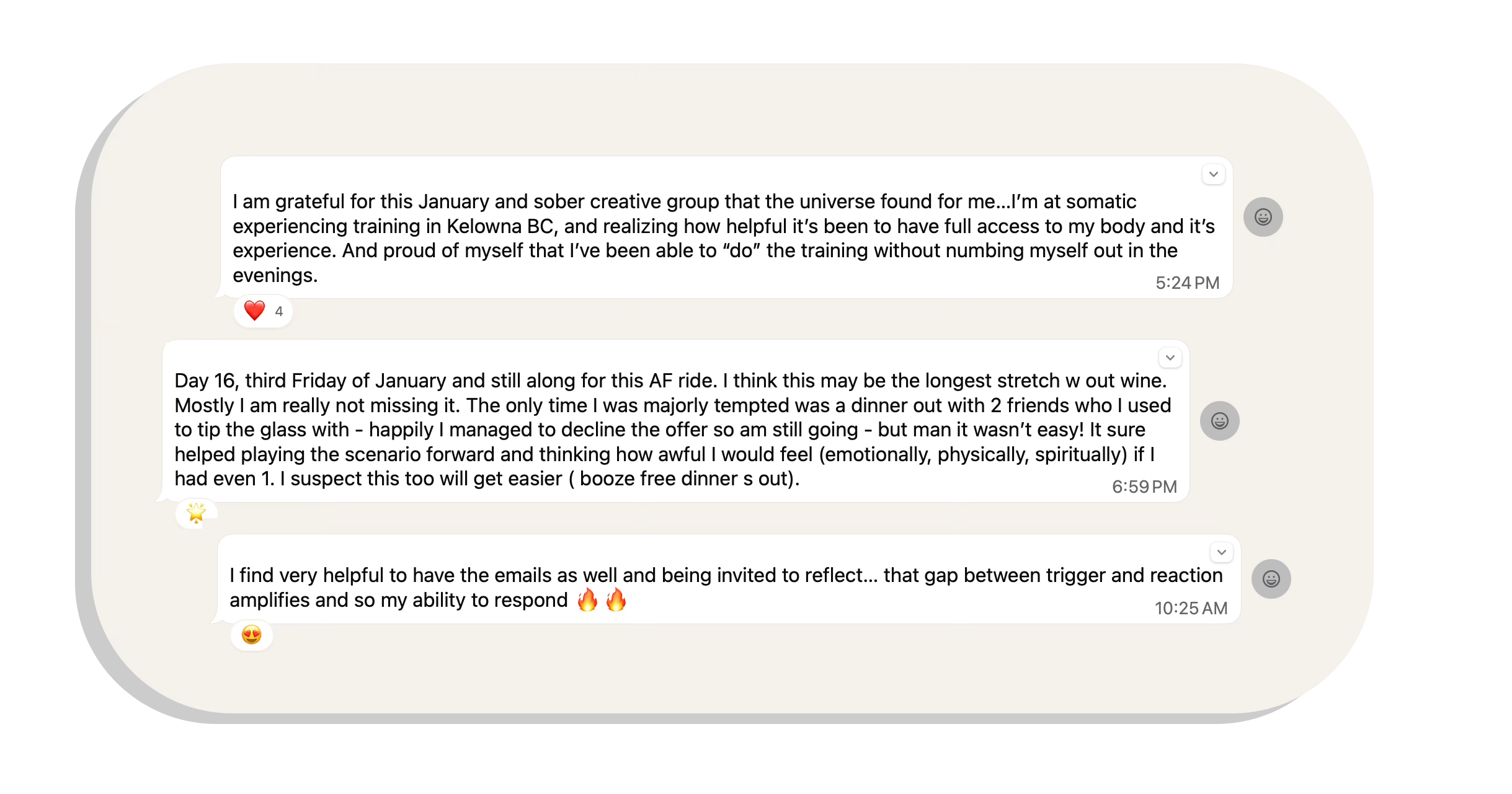
I’m beyond thrilled to witness the incredible engagement and support each member is sharing within our WhatsApp community. It’s truly inspiring, which is why I’ll be doing 3 more this year. April. July. October.
Every person below who’s shared these words took the same first step: they decided to try something different.
Ready for your own reset? Join the waitlist and I'll let you know the moment the next cohort opens.
What becomes visible when you slow down enough to see it?
The practices. The patterns. The path forward that's been there all along.
If you're ready to explore what 1:1 coaching could unlock, book a free clarity session.
No pitch. Just an honest conversation about where you are and where you want to go.
P.S. You can view past newsletter editions here.
“That evening drink wasn’t really about the alcohol. It was about the exhale.” Very much this. I realize I was just wanting to hold on to a moment or take a pause and just breathe. Good or bad. Lol. But of course it’s never a moment and it’s never one glass of wine. At least for me. Great article and great interview w/ Sam. I signed up for the next reset as well. 🙌🏻