


About Josh: Founder of The Sober Creative
The life you want keeps drifting from the life you’re living. I spent 22 years not knowing why.
I’m Josh. I’m not here to call you an alcoholic or tell you to hit some bottom. I’m here because I lived a version of what you might be living right now, and I found something on the other side of it that I never saw coming.
The loop
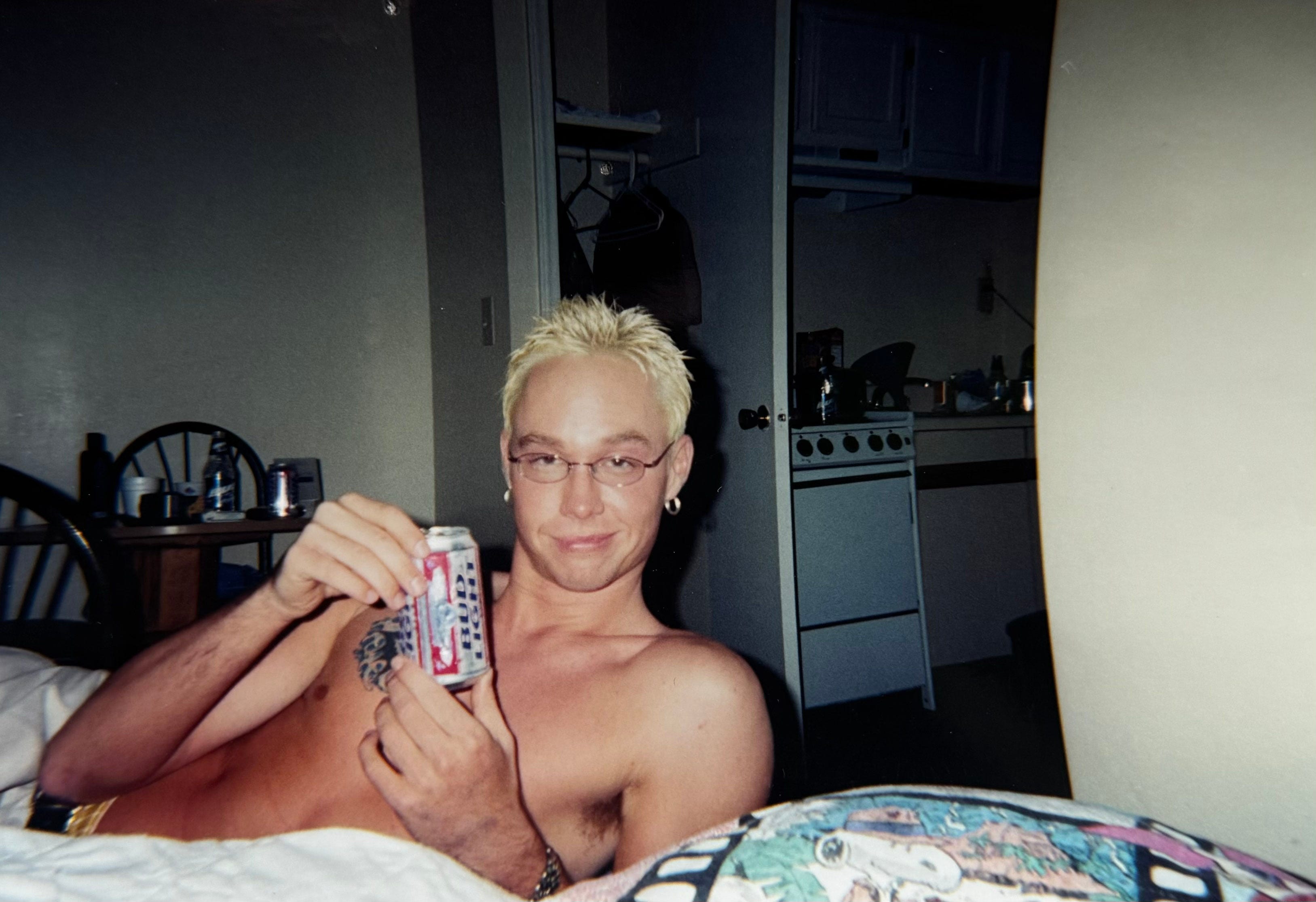
For 22 years, drinking was just part of who I was. Not a problem. Not a habit I questioned. Kegs on the back porch. Eight drinks at the cookout because that’s what you did. Beers after an 18-hour day on set. I worked on films for a living, and alcohol was how I got through the days.
The truth is, I never drank to be creative. I didn’t reach for it to make better work. It was just there, woven so deep into my life that I never thought to ask what it was costing me.
It was costing me a lot. Every single day.
My mornings started with a dry throat and a heavy feeling. Lying in bed, not wanting to get up, already sensing the day was half wasted before it began. I’d push through, work, and watch the clock. When 5 o’clock hit, I’d walk across the street, grab a six-pack, and start. I’d make a deal with myself: only this many tonight. I’d hit that number and want more. So I’d make a new deal. And when the store was closed, I’d drive to the gas station for more. Most nights ended with a 2am run to Wendy’s and sleep that wasn’t really sleep. The next day I’d recover until noon, eat something, maybe hit the gym, and do it all again.
That was the loop. Work, drink, recover, repeat. And it was taking my life. Not in some dramatic crash. In so many days and hours and minutes spent just recovering, over and over, while the life I actually wanted kept drifting further away.
Maybe you know a version of this. Maybe you don’t drink to create either. Maybe it’s just how you come down after a day that asked too much of you. The shift after work. The glass while you make dinner. The thing that lets your shoulders drop. It doesn’t look like a problem. It looks like the only break you get.
What it was really taking
The cost didn’t stay in one place.
It showed up in my body, sore and tired in a way sleep never fixed. It showed up in my money, where even when the account was low, I’d find a way to keep buying. It showed up with people, where I’d feel connected, but running the same conversation on a loop, never really there. It showed up in my relationships, where a hard night or a promise that fell through was all the reason I needed to pour another one. And it showed up most in the one place I couldn’t ignore. I wanted to get stronger and healthier, and I couldn’t. Everyone around me was moving forward, and I was standing still.
Pick any part of your life. Your health, your work, your money, the people you love, your friendships, the sense of who you’re becoming. If something in there feels stuck, the drink might be closer to the reason than you think.
The awareness
The crack formed in a HIIT class. I was bent over, heart rate in the red, and my coach looked at me and said the thing I already knew but hadn’t let myself hear. I wanted to feel strong. I wanted to think clearly. I wanted to do work I was proud of and become the person I could feel I was capable of being. That person and the drinking couldn’t both exist.
It still took me two more years to choose.
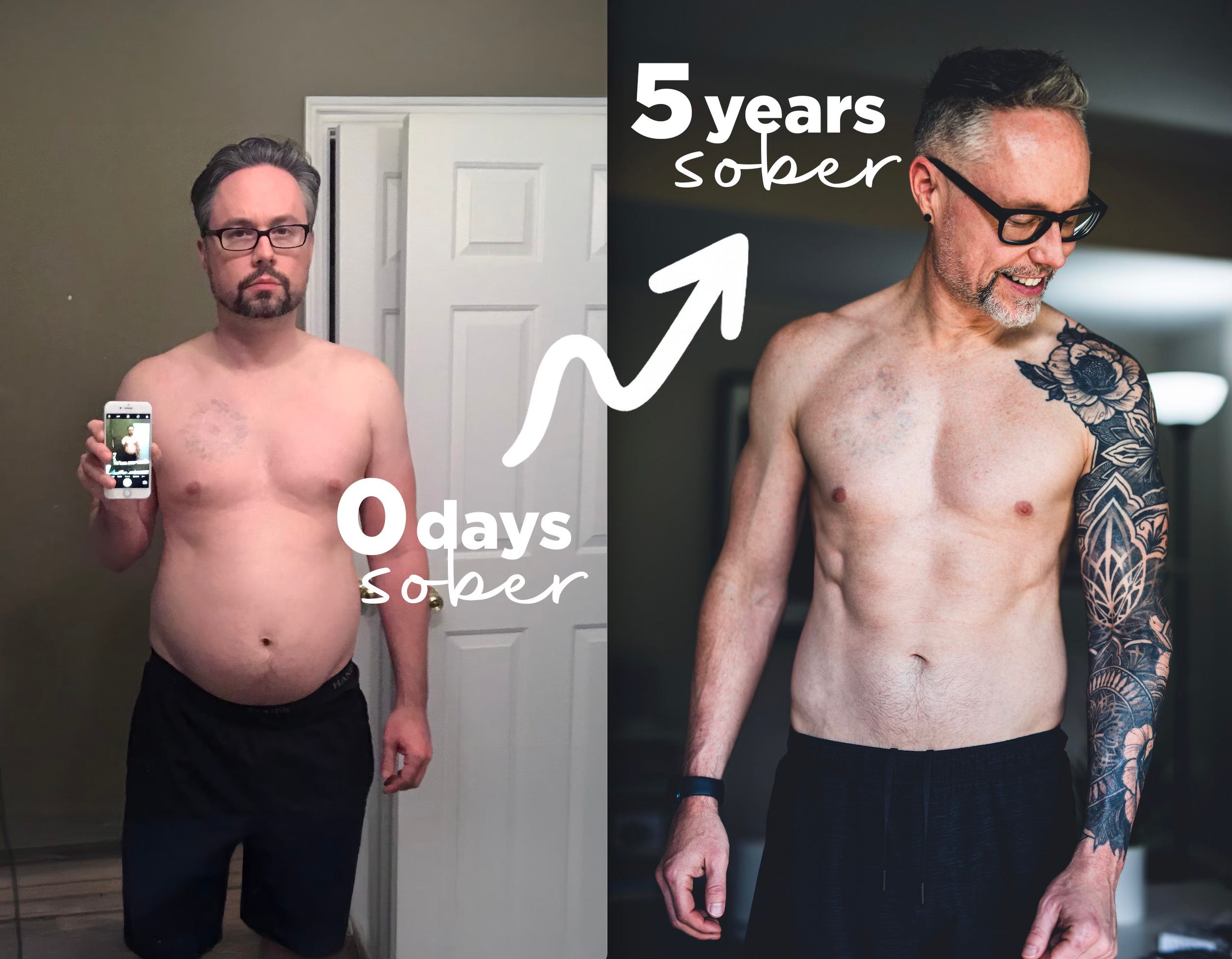
On August 19, 2020, I posted publicly that I was giving up alcohol for one year. No experiment. No “let’s see how it goes.” I said it out loud, to people. I removed the exit.
What came back
I quit for my health. I thought I was getting my body back. I had no idea I was getting everything else back too.
The mornings changed first. Now I wake up without an alarm, with a kind of natural freshness, glad to be up instead of buried under the weight of the night before. I make a green ginger tea and I know the exact 15 minutes it takes to be ready for the first sip. I light incense. I journal or meditate in the quiet around 5am. Then I head to the gym. Waking up went from the worst part of my day to a gift.
The bigger thing was presence. When I’m with someone now, I’m all the way there. I listen. I actually connect. I didn’t realize how much I’d been missing until I could feel the difference. When you’re drinking, it feels like connection, but it’s the same loop playing again. Real presence is being in the room, in the moment, in your own life.
Letting go of alcohol gave me a different relationship with discipline. I’ve meditated for 365 days straight. Not because I force it, but because sticking with something hard builds the ability to do hard things, and that ability spreads into everything. Discipline turned out to be freedom.
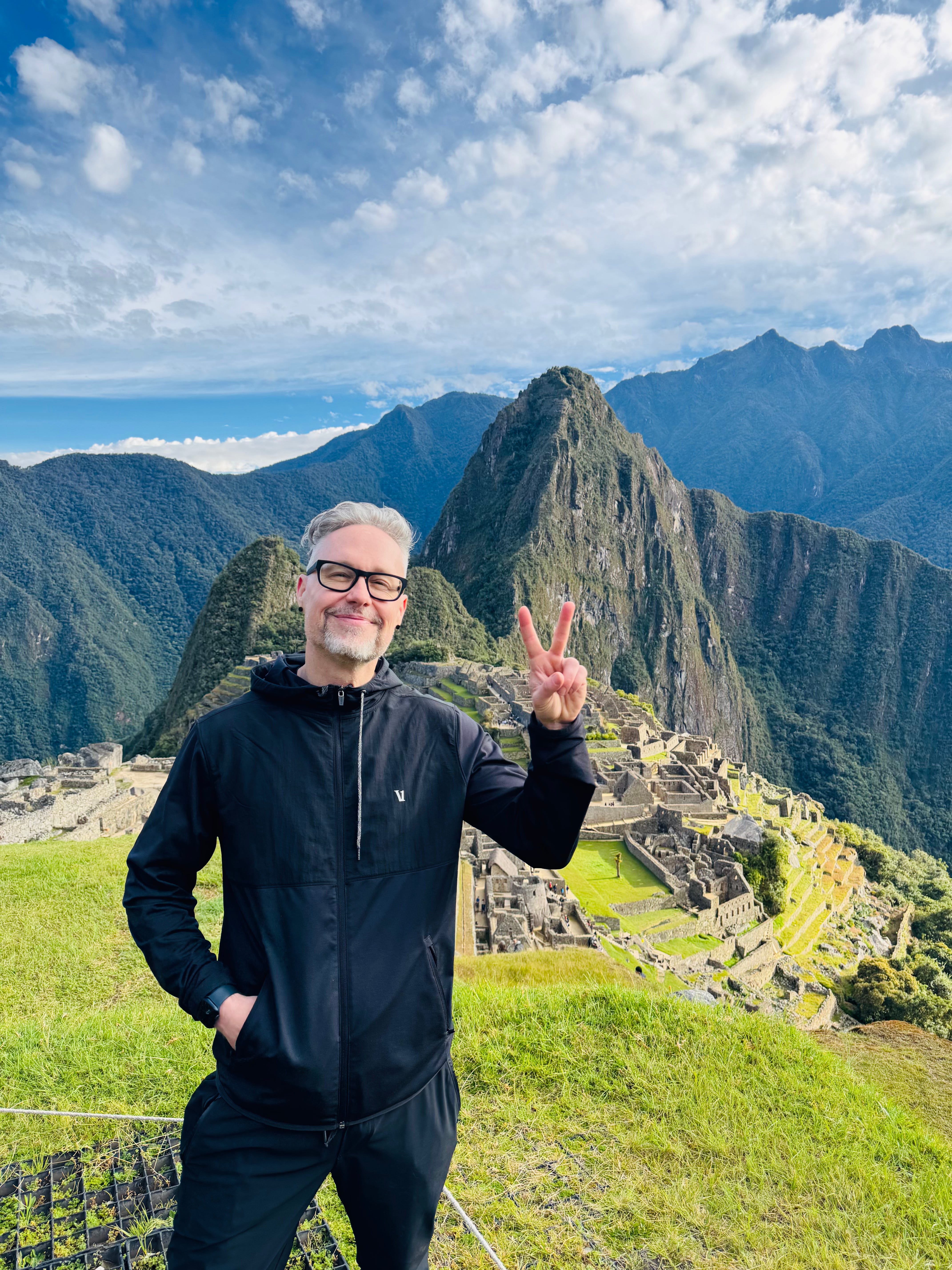
Then it started compounding. The hard thing made me want to reach for other hard things. At 44, I went skydiving for the first time, something I’d wanted for years and never did. I hiked the Salkantay trail in Peru, more than 30 miles over five days through the mountains outside Cusco. There’s a point on that trek where people who can’t make it get strapped to a horse and dragged up the mountain. The old me would have been on that horse. Sober, I was close to running up it. The night before the hardest day, I didn’t think I could finish. I chose rest over the group dinner, woke up lit up, and the people who’d watched me struggle the night before couldn’t believe it was the same person.
That’s what I mean when I say the work I’d been trying to do my whole life started happening. Not despite quitting. Because of it.
What this is really about
Here’s what I learned, and it’s the whole reason this exists.
Creativity runs deeper than being an artist. It’s not only painting or filmmaking or anything with a label on it. It’s the power to picture a different life and create the conditions to build it. The nurse who finds a calmer way through a brutal shift. The parent who keeps a whole home running on no sleep. The person at a desk who sees the move nobody else saw. You have it. Everyone does.
Alcohol doesn’t just hand you a rough morning. It dulls the exact part of you that imagines a different life and builds it. It keeps you getting through your days instead of making something of them. Take it out, and that capacity comes back online. That’s the work I do with people. Release the thing in the way. Get your clarity and energy back. Become the person you can already feel you’re capable of being.
Who this is for
The first person I ever worked with was a nurse.
She’d been a daily drinker for more than ten years. By the time she found me she was in rough shape, foggy and anxious, her face swollen, her drinking creeping up no matter what she tried. She’d read the books. She’d worked with another coach. Nothing stuck. Her job is high stress, long physical hours, managers and coworkers and no room left to take care of herself, because all day she’s taking care of everyone else. Alcohol was how she came down at night. Six or seven drinks, most nights.
She found me through an essay I’d written, and we started working one on one. No judgment. No preaching. No alcohol statistics. Just a clear, simple plan and small steps. She began swapping in non-alcoholic drinks. We watched the number on her chart slide down week by week, from six or seven a night to whole days at zero. No medication, no supplements.
One night on a call, I asked her how it would feel to pour out the alcohol in her house right then, with me watching, so she wasn’t alone in it. She went quiet. Then she said okay, carried her phone to the kitchen, and poured all of it out while I watched. We celebrated right there on the line.
I’ve poured it out too. More nights than I can count. And then driven back to the store an hour later. I know it’s a process. I’m not here to judge where you are. I’m here because I’ve stood where you’re standing, on both sides of the drink, and I can help you find your way through.
If you see yourself anywhere in this, you’re in the right place. Wherever you are with alcohol, questioning it, done with it, or somewhere in between, there’s room for you here.
Where to start
Pick the one that fits where you are.
1. Not sure yet? Subscribe. Follow along, free. You’ll get my regular stories and ideas, plus two things I only send to subscribers:
One honest question a month, sent only to you. It names a pattern quietly running under your work, your relationships, or your evenings, and gives you a moment to choose differently before it repeats.
A simple pause practice for the moments you’d normally reach for a drink, so your next move becomes a choice instead of a habit.
2. Ready to start? The Reset. A guided 30-day alcohol-free reset, one-on-one from the first session — four calls a month, daily support in between, no long contract. It’s built to give your system a real chance to recover, not just continuing to deplete it.
Want to talk it through first? Book a free clarity call
“I’m a 10-plus-years daily drinker. By August 2025 I was in really bad shape, drinking daily, with a swollen face, feeling foggy and anxious. In our very first session Josh showed no judgment, no preaching, and didn’t talk about alcohol statistics. He offered a clear, structured plan with positive creativity. Now, after 3 months, I haven’t opened the door of the liquor store for two and a half months, something I wasn’t able to achieve for many years.” Yuliya, verified review on Trustpilot
“I’d read the books, listened to the podcasts, talked to my therapist. The one thing missing was a Josh. Someone who’s been there, on both sides of the drinking, to guide, encourage, welcome, and think it through with you.” Rachael
Create a life filled with possibility, not booze.
