


10 Pain Points of Sobriety is a weekly series where I explore the real pain points of quitting alcohol—the uncomfortable truths that surface when initial motivation fades. I didn’t need alcohol to be creative; creativity was already part of my life. Alcohol stole the time and energy I could have spent creating. It was my escape from feelings of inadequacy, from not being good enough, from trying to fit in. Five years into sobriety, I’ve learned that removing alcohol isn’t the end—it’s the beginning of becoming who you’re meant to be. Each week covers one pain point: the struggle, the truth no one mentions, and what actually helps.
The Pain
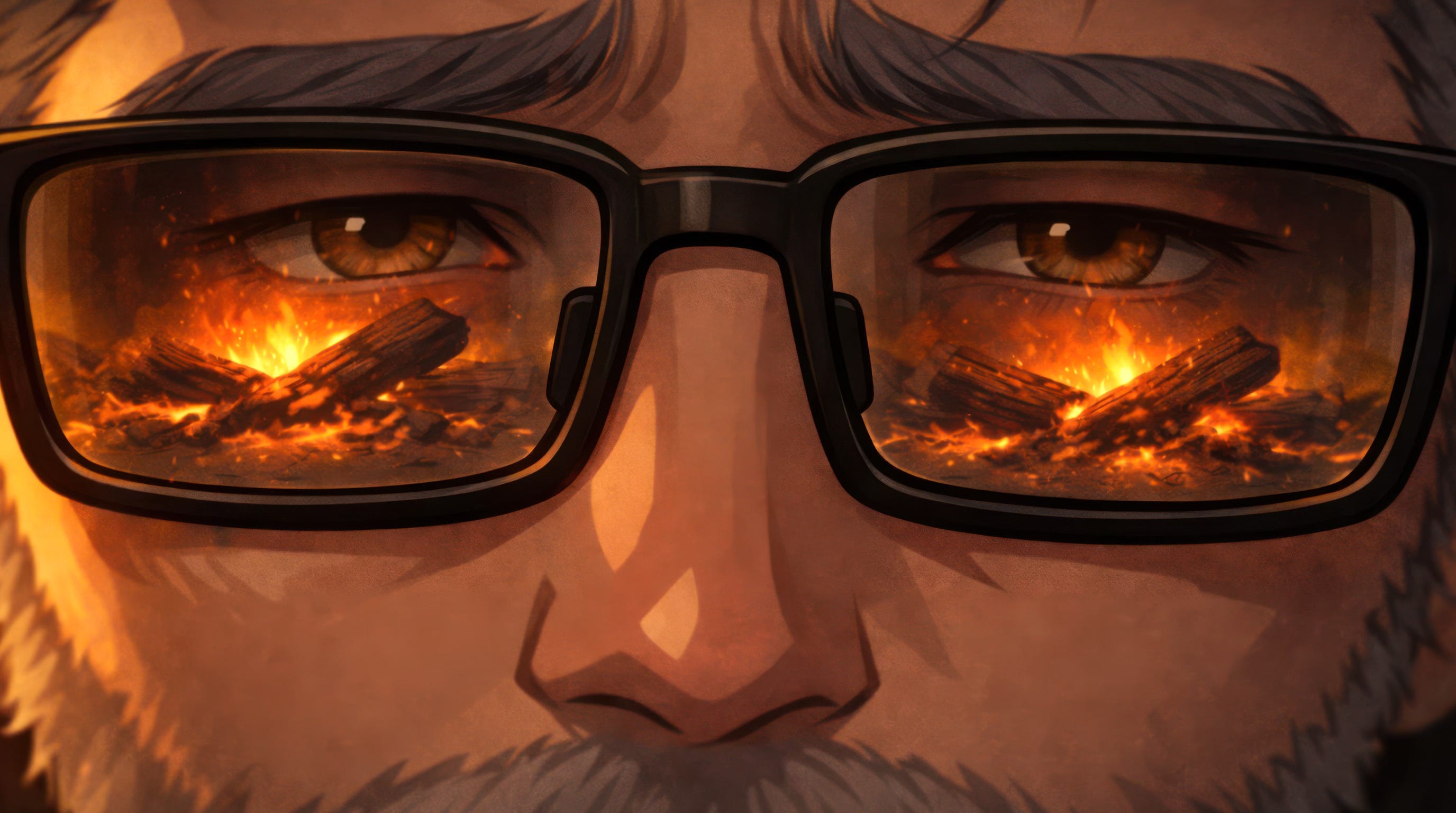
The orange glow shimmers in the reflection of my glasses. On the other side I watch the embers slowly falling into ash. The feeling inside is one of hope fading away like the light coming from the chimney. I take another sip. The firewood that’s slowly dwindling away starts to separate, not because it’s going out, but because my vision is creating two of them.
This was New Year’s Eve, 2016. Alone. Wasted.
I wasn’t out celebrating with friends. I was waiting. Dependent on a relationship that wasn’t giving me what I wanted. Another disappointing message saying I can’t make it, something has come up. Another night where the expectations left me questioning what wrong did I do.
I wake up the next day. It’s a fresh start. But nothing’s changed. I’m still stuck in the same pattern - not knowing how to trust myself, my instincts softly grazing the surface of my awareness, whispering that I should leave this relationship, but all my focus continued to point outward. Trying to control the outcome by being kind. By doing nice things. By quietly hoping the relationship would become more engaged.
I wasn’t ready to look at myself. I was relying on someone else, something external, to fill a void that was internal. There was something about myself I didn’t like and couldn’t face without a drink in my hand.
My heart continued to be open and it continued to be broken. And through all these moments of disappointment, alcohol was there to numb the pain.
The regret comes from not trusting myself sooner. Using alcohol as a way of escaping versus receiving the signal.
Four years I can’t get back.
I want to point out that with each of these pain points, the answers come from self-exploration. You have your own unique makeup, history, experiences, and habits that contribute to the desire to drink. What may work for you may not work for someone else. Adopting a state of curiosity, being willing to experiment, to practice, and ultimately commit to the process, will lead you more closely to the changes you wish to seek.
The Story
Should is a dangerous word. Saying I should means I had autonomy over choosing a different path. But the path was the one I walked. If I tell myself, “I should have trusted myself sooner. I should have looked honestly at what I was avoiding - the things about myself I didn’t want to face, the insecurities I was trying to solve by making someone else happy.” But everything happened exactly as it needed to. I wasn’t ready. It was easier to pour another drink and convince myself tomorrow would be different.
I learned early that love meant someone else taking care of me. Feeding me. Sheltering me. Telling me I was okay. So through this learned behavior when I couldn’t get what I wanted, I didn’t know how to tell myself I was okay. I didn’t know how to take care of myself. The insecurity of that - of not having those skills - became uncomfortable. And alcohol fixed that.
Four years. Four years of not putting that attention toward myself, toward my own capabilities, my own love for myself, toward things that would further my career and my life. The real work couldn’t start until I could look at myself honestly. Until I could face the things I kept avoiding. And I couldn’t do that when alcohol was numbing every signal my body and mind were trying to send me.
The Shift
Regret is grasping at a past you can’t change.
What we don’t realize is that we only have this moment happening in front of us right now. Regret keeps us stuck in the past - replaying decisions, rewriting conversations, imagining different outcomes. But the decision or action at the time happened. It’s done.
Through sobriety, I made a choice to face what I kept avoiding. Not to understand it all, not to fix it, but to stop running from it. And that shift - that ability to finally look at myself honestly - changed everything.
Over five years in sobriety now, there’s an appreciation toward what I’ve been through because it’s allowed me to grow. I can see the mistakes I made with a clearer picture. I’m not trying to avoid making mistakes - I’m human, I’ll make them. But with this awareness, I’m able to make better choices for myself.
I’m intentionally creating a life I’m falling in love with. Not grasping at the past I lost, but building with what I’ve learned. Those years I can’t get back taught me how to finally put attention toward myself - my capabilities, my choices, my life in the present moment.
Sobriety gives you the clarity to stop grasping. To take the lessons from the years you lost and finally use them to build something real.
The regret doesn’t disappear. But it stops paralyzing you. It becomes the key to unlocking the chain.
The Science
The brain is designed to learn from the past. But when it comes to regret, that learning mechanism gets stuck in a loop.
The orbitofrontal cortex - the region just above your eyes involved in decision-making - compares what actually happened with what could have happened. It runs the simulation over and over. “What if I had left sooner? What if I had trusted myself?” When it becomes repetitive, it turns into rumination.
Studies show this rumination reduces working memory and inhibits cognitive function. A 2015 study published in Cognition and Emotion found that individuals in a depressive mood had a 12 percent reduction in working memory compared to those not experiencing depression. You're not solving anything. You're just reinforcing the pattern.
In order to cope with ruminating thoughts we need a distraction, we need a drink.
Alcohol disrupts the prefrontal cortex - the area responsible for executive function, impulse control, and emotional regulation. Early on, you drink for pleasure. But chronic use shifts the motivation. You’re no longer drinking to feel good. You’re drinking to not feel bad.
The more you use alcohol to regulate emotions, to numb the ruminating thoughts of regret, the less your brain develops its own capacity to do so. The numbing becomes the only tool you know. Meanwhile, the signals your body and mind are trying to send - the instincts, the warnings, the quiet voice saying “this isn’t right” - get drowned out completely.
The brain holds onto regret because it’s wired to remember threats. You keep replaying it, strengthening the neural pathway each time. But neuroplasticity works both ways. The brain can build new pathways. Letting go of regret isn’t about forgetting what happened. It’s about redirecting attention - from what can’t be changed to what can be learned.
Sobriety removes the numbing agent. It restores your brain’s capacity to process, to feel, to learn from experience without getting stuck in the loop. The regret doesn’t disappear. But it becomes information instead of identity.
The Practice
You can’t think your way out of regret. You have to feel it. This practice creates space to hold both the regret and the forgiveness at the same time.
Sit quietly. Close your eyes.
Bring to mind a specific moment that created regret. Not the general pattern - a specific scene. The balloons on the floor. The message that never came. The relationship you stayed in too long. Whatever it is for you.
Don’t analyze it. Don’t try to understand it. Just feel it. Let the regret be present without pushing it away.
Now, say this to yourself - internally or out loud:
“I forgive myself. I was doing the best I could at that time.”
Sit with whatever comes up. Feel what happens when you hold both the regret and the forgiveness at the same time. You’re not erasing what happened. You’re not pretending it didn’t hurt. You’re acknowledging that the person you were then made choices with the tools they had.
This isn’t a one-time practice. Regret doesn’t release all at once. But each time you sit with it - feeling it fully while offering yourself forgiveness and compassion - you’re building a new neural pathway. You’re teaching your brain that regret doesn’t have to define you. It can inform you instead.
The regret might not disappear. But over time, the grip loosens. And you stop holding on to a past you can’t change.
One moment of forgiveness at a time.
You Don’t Have to Do This Alone
What You’re Feeling:
Sobriety isn’t just about saying no—it’s learning how to live without the false edge.
The quiet moments feel heavier. The creative spark feels unpredictable. You’re trying to rebuild trust in yourself, one decision at a time.
The Pattern:
You stay clear for a few days → energy returns → a moment of doubt hits → “maybe just one” → fog creeps back in → regret → restart.
Each cycle drains your belief that change is possible.
The Hidden Truth:
You’re not broken—you’re rebuilding your creative system. The fog isn’t proof you’ve failed; it’s evidence your body and mind are recalibrating toward clarity.
What This Costs You:
The energy that could power your next breakthrough
The focus that builds real momentum
The self-trust that turns ideas into finished work
The Path Forward:
Each week, I’m unpacking the real pain points of sobriety—the ones no one prepares you for—so you can navigate them with awareness, not avoidance.
Next week: Broken Trust (and how to put the pieces back)
Ready to see what happens when the fog lifts?
On January 1, the 31-Day Sober Creative Reset begins.
No labels. No lifetime promises.
Just one month to restore clarity, energy, and momentum.
Wow! Wow! Wow! Even after 20+ years sober, that regret monster sits in the shadows and growls at me every so often. "Regret is grasping at a past you can’t change." What a powerful statement. Thank you!
Thanks, Josh, this is such a powerful post. The realisation that you only have the thing right in front of you right now is so profound and incredibly important for those of us who live with regret and instead should think about the opportunities that are present to us right in this moment. Thank you for writing. 🙏