


10 Pain Points of Sobriety is a weekly series where I explore the real pain points of quitting alcohol—the uncomfortable truths that surface when initial motivation fades. I didn’t need alcohol to be creative; creativity was already part of my life. Alcohol stole the time and energy I could have spent creating. It was my escape from feelings of inadequacy, from not being good enough, from trying to fit in. Five years into sobriety, I’ve learned that removing alcohol isn’t the end—it’s the beginning of becoming who you’re meant to be. Each week covers one pain point: the struggle, the truth no one mentions, and what actually helps.
The Pain
Groaning. Feet dragging along the floor. Reaching for anything. Flick. The first light of day pierces through me. Squinting. Trying to focus on what’s in the mirror, I turn away. I don’t want to look. Swollen cheeks. Puffy eyes. Throat so dry it hurts to swallow. I look down and begin to judge the fat around my stomach, shaking my head slowly, “Why do you keep doing this to yourself?”
I manage to down 12 ounces of water and get back in the bed. I look at the clock. 10 a.m. I close my eyes. Judgment follows. I wake up in the middle of the day still having body aches all over.
The rest of my day has 2 options. Try to eat something small, down some Advil, push through, and decide to do it all over again because as soon as the third beer is down, it doesn’t matter.
Or I stop for a few days. I give myself enough time to get a glimpse at recovery. It’s a light touch into what it feels like when more energy and clarity starts to come back. The glimpse fades quickly. It’s only enough time for me to forget the hell I just went through. Once the moment comes to choose, I say to myself, “You got through it once, you can do it again.”
There’s no opportunity to experience true physical recovery because of this cycle. The body is incredibly resilient—but only if you actually let it heal. The physical recovery keeps you at surface level, dealing with symptoms while the real recovery issues stay buried. You’re so focused on just getting back to “normal” that you never address why you’re drinking in the first place. The hangovers distract you. They take time away from creating. The brief glimpses of feeling better trick you into thinking the problem is manageable.
But the feelings driving you to drink—the inadequacy, the not being enough—those stay untouched. And as long as you’re stuck managing physical damage, the creative potential, the energy, the clarity you’re capable of—all of it keeps you walking in the same direction. You know this path all too well.
I want to point out that with each of these pain points, the answers come from self-exploration. You have your own unique makeup, history, experiences, and habits that contribute to the desire to drink. What may work for you may not work for someone else. Adopting a state of curiosity, being willing to experiment, to practice, and ultimately commit to the process, will lead you more closely to the changes you wish to seek.
The Story
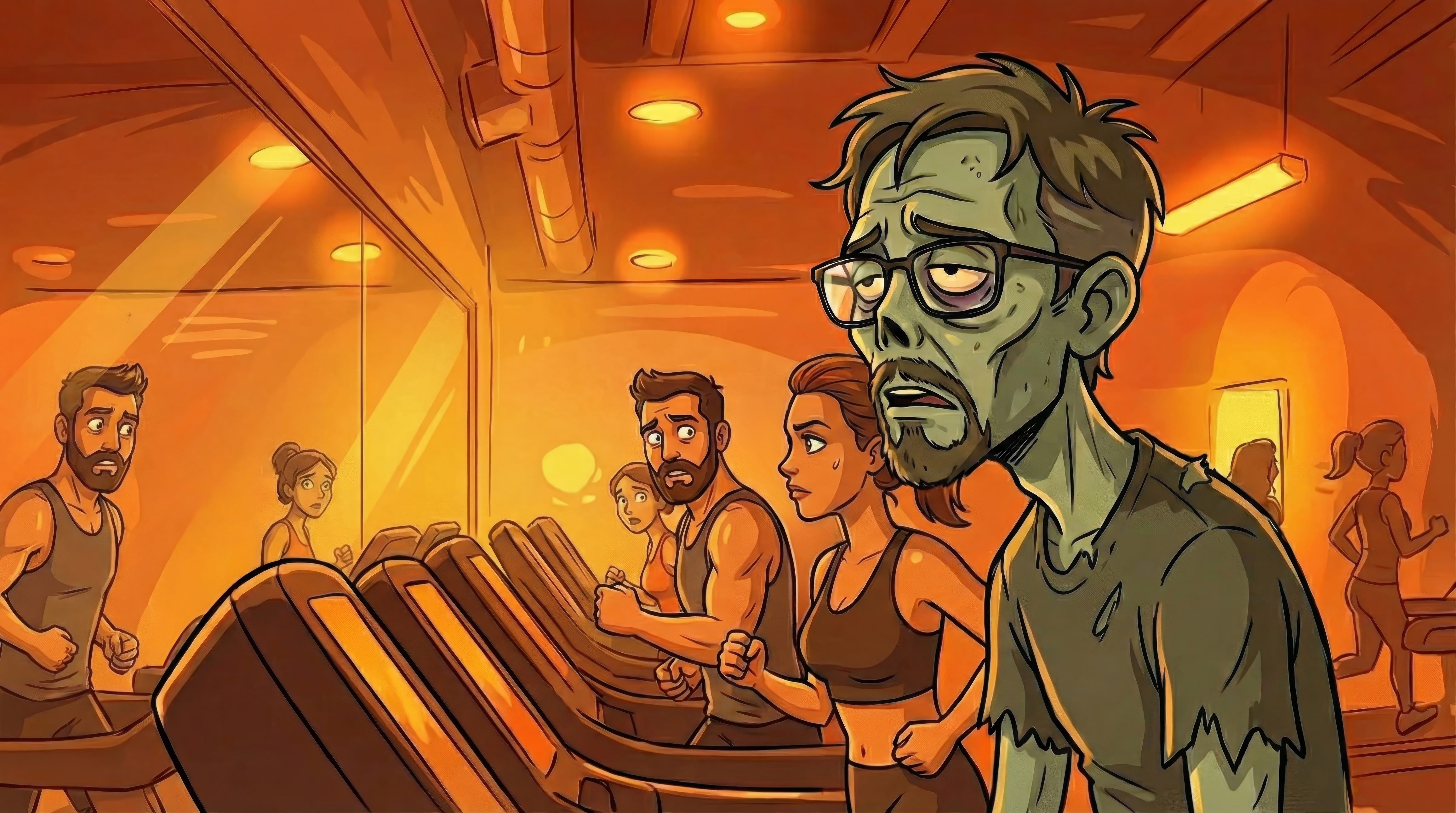
I’m bent over out of breath. The screen above has my heart rate over 170. The flare of orange neon lights reflect through the mirrors. I don’t recognize myself. Next to me is line of 20 treadmills and people running their asses off. There’s a voice behind me, “What’s going on?” As I catch my breath, “I drank too much last night. I can’t do it.” Coach Mike shakes his head slowly in acknowledgment and replies, “You won’t progress if you keep drinking like that.”
For some reason, this moment was a catalyst for me. Physically, I wanted to be at my best, but alcohol was destroying the capabilities of recovering and not only keeping me at baseline level, it was actually making things worse. I would consume more calories due to the amount of drinks and consuming more food leading me to gain more weight. It’s much harder to lose weight than it is to gain. My motivation was higher, but the direction was misguided. It was focused on trying to manage a hangover versus wanting to get into the gym. This took time away from building strength and those who know, a few days go by and you feel like you’ve lost your entire progress.
This whisper from my coach set the momentum. I was going to figure out how to control my drinking and get to the level I desired.
It was a process that went on for two years. I still suffered through lots of days physically recovering. Still being stuck in the cycle trying to control. I was learning. The length of recovery days turned into weeks and eventually months. This time opened space to explore what was healthier for me.
All of this was great, but alcohol was still in control. I needed something bigger. When I decided to go full stop and commit to year of abstinence in 2020, recovery started to take a different shape. Slowly I would put more time into my meditation practice. Work with nutritionists to develop healthier eating habits. Create a different relationship and routine with my sleep.
These practices became consistent. I started to see the benefits of discipline. Fitness stopped being something I did between hangovers. These practices reinforced each other—quality sleep, mental clarity, physical energy, creative presence.
I was beginning to experience a different type of physical recovery. The kind where I turned toward the challenges in front of me instead of away. Physical recovery opened the door. Mental recovery was waiting on the other side.
The Shift
My path to sobriety included different stages of awareness. In the beginning, I was completely unaware of my drinking habits and the health it took on my body. Then I started to become aware that this one thing may have been keeping me from progressing in areas of my life I wanted to improve. The most recent stage included choosing to stop and begin the process of healing. Through this awareness, I realized the surface level of physical recovery: managing hangovers, forcing food down, getting back to “normal” was a step toward the deeper physical recovery that needed to happen.
Once I committed to a full year and the practices became consistent, I finally had the capacity to sit with what was uncomfortable. Meditation wasn’t about managing a hangover anymore—it was about being present with feelings I’d been numbing for years. Quality sleep gave me mental clarity to recognize those feelings instead of reacting to them. Fitness rebuilt not just physical strength but the discipline to show up even when it was hard. These practices didn’t just optimize my body. They gave me the capacity to do the deeper work.
The inadequacy that used to send me to the bottle? I could finally sit with it. The “not enough” feeling that would spiral me into anxiety? I could breathe through it. The micro-moments throughout the day that used to build until I needed relief? I had tools to process them without numbing.
Physical recovery was necessary. But it was the consistent practices—working together, compounding over time—that gave me the strength to become a version of myself I didn’t know was possible.
The shift wasn’t immediate. It took time for these practices to compound, for my body to fully heal, for the emotional capacity to build. But gradually, something changed.
Five years into sobriety and about to turn 44, I feel younger and stronger than I was in my twenties. The difference shows up everywhere. On set, the energy people feel from me isn’t “I’m pushing through a hangover.” It’s “I’m here because I want to kick ass.”
Physical recovery stopped being about managing symptoms in a downward cycle. It became about building a foundation strong enough to hold the weight of the real work.
The Science
Physical Recovery: Your Body’s Resilience
Your body is remarkably good at healing itself. Give it a few days without alcohol and it starts repairing damage immediately.
Within 24-48 hours, your liver begins processing accumulated toxins more efficiently. Inflammation starts decreasing. Your body begins reestablishing natural sleep cycles that alcohol has been disrupting for years. Blood pressure begins to normalize. Energy levels stabilize as your systems recalibrate.
This is both a blessing and a curse. The blessing: physical recovery happens faster than most people expect. The curse: because recovery happens so quickly, your brain forgets how bad it was. You feel “normal” again and think the problem is solved. This creates the dangerous cycle—quick recovery tricks you into thinking you can drink again. Understanding what’s actually happening during recovery helps you see through this trap.
Here’s the timeline of what’s happening physically:
Days 1-7: Your body is in acute adjustment. Your nervous system is recalibrating without alcohol suppressing it. Anxiety, restlessness, and physical discomfort are highest as you process immediate toxicity.
Weeks 2-4: Sleep starts normalizing. Natural circadian rhythms return. Energy stabilizes. This is when brief glimpses of “feeling better” appear—and when the trap becomes most dangerous.
Months 2-3: Compound effects become visible. Liver function improves significantly. Inflammation decreases. Your body is largely repaired from the damage alcohol was causing.
But physical recovery is only half the equation.
Cognitive and Emotional Restoration: The Deeper Work
While your body heals quickly, your brain needs sustained recovery to address what’s been buried beneath the hangovers.
According to the Journal of Neuropsychiatry and Clinical Neurosciences,
“Chronic alcohol use is associated with longer sleep latency, altered NREM sleep, decreased and disrupted REM sleep, and reduced total sleep time. These changes occur as individuals who use alcohol chronically become tolerant to the sleep-enhancing effects of alcohol, but remain sensitive to the stimulating effects.”
This disruption goes beyond just poor sleep. When your sleep architecture is compromised, your brain can’t properly process emotions, consolidate memories, or regulate stress. You’re operating in survival mode, managing symptoms rather than addressing root causes.
This is why you can’t do the deeper work while stuck in the hangover cycle. Your brain doesn’t have the capacity. Every ounce of energy goes toward physical recovery, leaving nothing for emotional regulation or self-reflection.
Sustained sobriety changes this. When you stop the cycle and maintain consistent practices—quality sleep, meditation, fitness, proper nutrition—you create the neurological conditions necessary to process the feelings you’ve been numbing. Your emotional regulation improves. You build the capacity to sit with inadequacy, anxiety, and discomfort without reaching for relief.
The practices aren’t just about physical health. They’re about creating the cognitive and emotional foundation to do the real work of recovery.
Physical recovery lays the foundation. But it’s the sustained practices—working together, compounding over time—that give your brain the capacity to do the deeper work.
The Practice
For the next three days, you’re going to do two things: stop drinking alcohol and focus on hydration. That’s it.
Three days gives your body enough time to start processing the immediate toxicity and begin the early stages of physical recovery. It’s not enough time for full healing—but it’s enough to notice the difference.
Day 1: Hydration Focus
Your body is dehydrated from alcohol. Today, drink 64 ounces of water minimum. Set a goal and track it. Use a water bottle, set reminders on your phone, whatever works.
Notice what happens. Do you feel worse before you feel better? Are you tired? Restless? Anxious? Write it down.
Day 2: Body Awareness
Continue with 64 ounces of water. Today, pay attention to your body. How are you sleeping? Are the body aches still there? Is your throat less dry? Is the fog lifting even slightly?
You’re building awareness of what your body feels like when it’s actually recovering instead of just managing another hangover.
Day 3: Space
Same hydration goal. By today, you might notice small shifts. More energy. Clearer thinking. Or you might still feel terrible—that’s normal too. Your body is doing deep work even when it doesn’t feel like progress.
At the end of Day 3, ask yourself: What did I notice? What felt different? What stayed the same?
Why This Works
Three days without alcohol isn’t about proving you can quit. It’s about creating space to observe what physical recovery actually feels like. Hydration supports your body’s natural healing process and helps you feel the difference between managing symptoms and actually healing.
This practice isn’t about perfection. It’s about awareness. You’re learning to listen to your body instead of numbing it.
This is how you start building the foundation for true physical recovery. One day at a time.
You Don’t Have to Do This Alone
What You’re Feeling:
Sobriety isn’t just about saying no—it’s learning how to live without the false edge.
The quiet moments feel heavier. The creative spark feels unpredictable. You’re trying to rebuild trust in yourself, one decision at a time.
The Pattern:
You stay clear for a few days → energy returns → a moment of doubt hits → “maybe just one” → fog creeps back in → regret → restart.
Each cycle drains your belief that change is possible.
The Hidden Truth:
You’re not broken—you’re rebuilding your creative system. The fog isn’t proof you’ve failed; it’s evidence your body and mind are recalibrating toward clarity.
What This Costs You:
The energy that could power your next breakthrough
The focus that builds real momentum
The self-trust that turns ideas into finished work
The Path Forward:
Each week, I’m unpacking the real pain points of sobriety—the ones no one prepares you for—so you can navigate them with awareness, not avoidance.
Next week: Financial Strain (and how to face the numbers without shame).
Right now, you can find additional support here:
Take the free assessment → Find out if alcohol is blocking your creative potential (5 minutes).
Book a free call → Let’s design a plan that fits your creative process and the life you want to build.
The 30-Day Alcohol-Free Reset Starting January 1 is coming → Be the first to know when doors open on December 1.
Awesome, thanks for posting!