


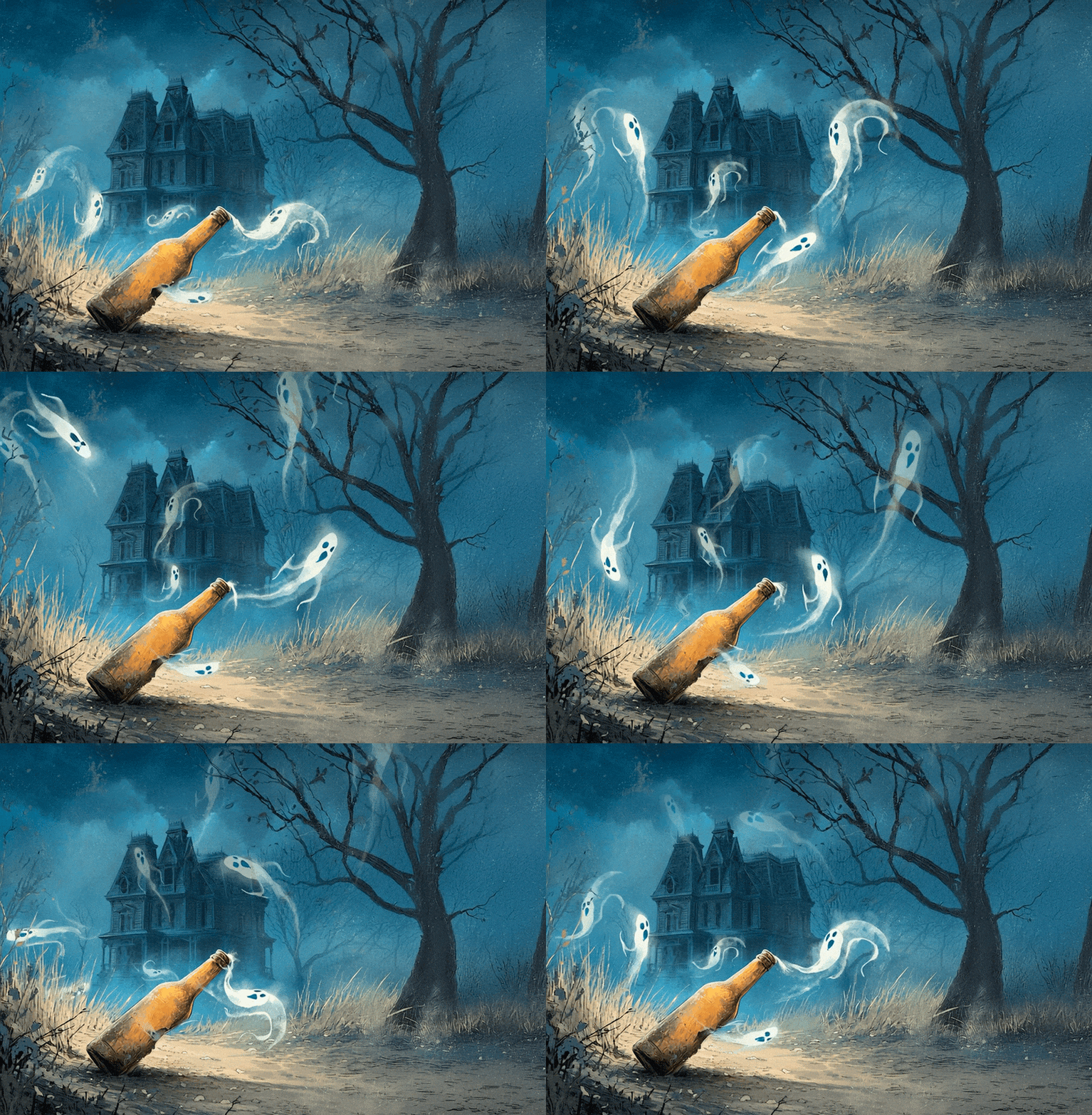
It’s common and completely normal to experience fear when you stop drinking. Your body and mind have been used to this habit for so long. When all of a sudden you stop, your brain is sending a signal saying, “Hey, why are you stopping? We like the way this makes us feel.” Body sensations are trying to pull us toward getting it. Survival mechanisms kick into gear. All of these feelings are saying I need this to survive.
Now, I want to be clear, what I’m saying here is not to be mistaken from someone who has a serious drinking habit. There can be life or death consequences based off the body’s need—so it’s very important to not confuse what I say as advice for everyone. If you are drinking at this level, then I would recommend contacting your local detox center first before attempting any changes with your drinking. Having medical professionals during this transition is of the upmost importance.
Many areas can be explored around this topic, so for this post, I will focus on three and cover those. They will be centered around withdrawal management, identity crisis, and social connections. Let’s jump into the first one.
“I can’t be with discomfort.”
For years, alcohol has been your protection from feeling what you didn't want to feel. Shame, inadequacy, uncertainty, disappointment—all the uncomfortable emotions that make you human became signals to reach for a drink. You've built an entire system around avoiding discomfort, and now the thought of facing these feelings without your usual escape feels impossible.
The cravings aren't just about alcohol—they're about comfort. Your brain has learned that discomfort equals danger, and alcohol equals safety. When you remove that safety net, every difficult emotion feels amplified. The anxiety about a work presentation, the disappointment from criticism, the loneliness of a quiet evening—all of it demands to be felt, and you're not sure you're ready.
The truth is, you've been ready longer than you think. Every time you've faced a challenge in your creative work, every time you've pushed through a difficult project, every time you've shown up despite fear—you've already proven you can be with discomfort. Alcohol hasn't been protecting you from these feelings; it's been preventing you from learning that you can handle them.
What is taken away will need to be replaced, but not with another substance or distraction. It needs to be replaced with practices that teach you to be present with discomfort rather than escaping from it. The cravings are information, not commands. They're your nervous system learning a new way to process difficulty. You're not broken for feeling them, and you're not weak for wanting relief.
The difference is learning that discomfort, like seasons, is temporary. When you stop running from these feelings, you discover they pass through you like wind through branches. You learn to stand in the storm rather than seeking shelter, building strength through presence rather than avoidance.
Practice: When discomfort arises and you feel the urge to drink, set a timer for 5 minutes. Sit with the feeling without trying to fix, change, or escape it. Notice where you feel it in your body—your chest, your stomach, your throat. Breathe into that space. Don't judge the feeling or tell yourself a story about it. Just let it be there. When the timer goes off, notice that you survived 5 minutes of discomfort without needing alcohol to rescue you. You're building evidence that you can be with difficult emotions and come out the other side intact.
In addition to this practice, try this meditation on “Cravings,” which specifically helps in this area. You can also listen to additional meditations found here.
Cravings: A Meditation for Impulse Control and Mindful Awareness

Disclaimer: Meditation can bring up powerful emotions. Be kind and gentle to yourself during meditation. Step away if you need to and most importantly, breathe
“I’ll be boring.”
Your identity is going to shift, and the question you will be wondering is, “Who am I without alcohol?” The initial answer around who you become will most likely revolve around the fear of loss. Thoughts around losing your humor at networking events, you’ll lose access to the "interesting" version of yourself in creative collaborations, you won’t be able to overcome the awkwardness at industry parties, or even worse, you lose the important relationships built during after-work drinks. You believe it unlocks your humor, storytelling ability, and the charm that makes people remember you—when you drink, this bridges the gap between who you are and who you think you need to be to matter.
The truth is, you already are interesting and fun. You just need to believe it. Your current belief has been set (and reinforced for years, most likely). You believe that when you are drinking, you are more fun to be around. The fear of judgment is lessened when alcohol is consumed because alcohol disrupts the cognitive area around emotions. Here lies the problem; this is reinforced every time you drink. Every time you drink, this reinforces your need to be accepted. To be your best. To be interesting and fun.
This shift in identity is a practice of becoming the version of you that shows up without alcohol. With continued abstinence comes the authentic, real version of you. Real connections, real creativity, and real confidence continue to build, and the identity you crave becomes your reality. Eventually, you look back and realize why you didn’t do this sooner.
Practice: For the next 30 days, attend one social or professional event completely sober with this intention: observe yourself without judgment. Before each event, write down one fear you have about showing up without alcohol. During the event, notice a few moments when you feel genuinely engaged or interested without any substances. After the event, write down one thing you discovered about your authentic self that surprised you (I would love it if you came back and shared your experience, or sent me a DM).
The goal isn't to prove you're fun—it's to practice being with the discomfort of not knowing who you are in these spaces without alcohol. Each time you show up authentically, even if it feels awkward or quiet, you're building evidence that contradicts the belief that you need alcohol to matter. You're creating new neural pathways that say, "I am enough as I am."
Start where you are. Maybe it's a coffee meeting instead of drinks. Maybe it's staying an extra hour at a work event instead of leaving early. Maybe it's speaking up once in a group conversation when you normally wouldn't. Every opportunity you practice showing up without the mask, the momentum continues to build.
“I’ll lose my relationships.”
Alcohol is everywhere. The majority of time spent with others, drinking is a part of this shared experience.
Home. Events. Parties. Games. Weddings. Restaurants. Movies. Airplanes. Graveyards. Bathrooms. Okay, this is getting weird.
We are surrounded by it. It’s become so deeply ingrained in our culture, the mere thought of stopping feels as though you are abandoning or becoming an enemy. The fear of losing those closest to you.
The truth is, you will lose relationships. Because the people you drink with will have a hard time accepting and even supporting your decision around drinking. They won’t feel comfortable drinking around you, and it’s not their responsibility to stop or change. That’s not to say this will happen with all of your relationships; this will be different for each person.
The true friendships, though, will respect and support your decision. You are making this decision to support yourself, and you are also doing this for everyone else, too. All of your actions, choices, and way of being will come from a place of clarity, and that is worth losing what is potentially keeping you held back.
Practice: For the next two weeks, pay attention to how relationships feel when alcohol isn't involved. Start small—suggest a coffee meeting instead of drinks, a morning hike instead of happy hour, or a lunch instead of dinner with wine. Notice which friends say yes enthusiastically, which ones seem uncomfortable with the suggestion, and which ones keep pushing for alcohol-centered alternatives.
Keep a simple note in your phone after each interaction: write down the person's name and one word describing how the connection felt—authentic, strained, natural, forced, deeper, or surface-level. Don't judge what you discover; just observe. The goal isn't to test your friendships or create drama—it's to gather real evidence about which relationships are built on genuine connection versus shared drinking habits. You're practicing seeing your relationships clearly, without the need for drinking that might be masking incompatibilities or highlighting dependencies.
You're not losing relationships—you're discovering which ones were actually there to begin with, and creating space for connections that can support who you're becoming rather than who you used to escape being.
The Stages of Quitting
These stages will vary based on the level of difficulty and length of time for each person, but there are commonalities in the process itself.
Commitment Stage
Level of difficulty: 10-High
Length of time: First 30 days
This is when you make the decision and commitment to stop drinking. It's the hardest part because you're fighting against years of established patterns, and your brain is sending signals that it needs alcohol to survive. You're learning new activities to replace drinking, facing all the questions about what your evenings will look like, and dealing with the most intense cravings and discomfort.
Withdrawal Stage
Level of difficulty: 7-8 Medium
Length of time: 1 to 2 months
Your body is adjusting to functioning without alcohol. The physical cravings start to lessen, but you're still practicing new routines and building momentum. This is where you begin to see glimpses of clarity and start to trust that the process is working. You're settling into new patterns but still requiring significant effort to maintain them.
Settling Stage
Level of difficulty: 3-4 Low
Length of time: 3 to 4 months
The new practices become more natural. You've built enough momentum that sobriety starts feeling sustainable rather than something you're pushing through. Your authentic creative voice begins to emerge consistently, and you start to see the person you're becoming without alcohol.
“I’ll gain clarity and so much more.”
These fears—the discomfort, the identity shift, the relationship changes—they're not obstacles. They're the doorway to possibility. The very thing you're afraid of losing (who you think you need to be) is actually what's keeping you from discovering who you really are.
When you stop using alcohol to escape discomfort, you learn that you're stronger than you thought. When you stop performing a version of yourself that requires substances, you discover your authentic voice has been waiting underneath all along. When you stop clinging to relationships built around drinking, you create space for connections that can support the real you.
Your creativity isn't hiding behind alcohol—it's being constrained by it. The clarity, confidence, and authentic creative power you're seeking isn't something you need to create; it's something you need to uncover. Every time you practice sitting with discomfort, every time you show up authentically, every time you choose genuine connection over surface-level bonding, you're not just getting sober—you're becoming The Sober Creative.
The path forward is clearer than you think. You already have everything you need to take the first step. You just need to trust that the person you're becoming is worth more than the person you're escaping from.
Ready to see where you are on this journey? Take the Sober Creative Assessment to discover your unique relationship with alcohol and creativity, and get personalized insights for your next steps:
