



Some guests come to these conversations with a tidy arc — the fall, the turning point, the recovery. Doan Winkel doesn’t have that story. He has something interesting and one we explored: the willingness to still be in it.
At 25, after three stints in rehab, a suicide attempt, and a collection of dangerous adventures he can only partially recall, Doan made a decision that no program, sponsor, or support group could make for him. He was exhausted. He quit. What he didn’t understand until his late 40s was that quitting substances wasn’t the same as dealing with the addiction. He had simply moved it somewhere else — into work. Into the all-consuming drive to build, teach, achieve, and impact. Into a PhD completed in three and a half years. Into a newsletter reaching 20,000 people. Into 80-hour weeks that cost him the same things the drinking once did.
Now in his 50s, Doan is doing the harder work — the one without applause. He’s an associate professor of entrepreneurship, an AI education consultant, and a TEDx speaker who has helped shape curriculum at more than 120 institutions worldwide. He’s also a person still learning how to put the phone down, sit with his dogs on a quiet morning, and just be somewhere without his mind already being somewhere else. That tension — between drive and destruction, between output and what it costs you — runs through every minute of this conversation.
[02:08] Growing Up in Indiana: Curiosity, Access, and the Feel-Good Trap
Doan walks back through his teens — parties in Indiana fields, a boarding school outside Detroit with 400 teenage boys, minimal adult supervision, and proximity to a city. No trauma. No triggering event. Just access, older kids, and something that felt good.
Doan grew up in an intellectual household where parents were “pretty oblivious” — not neglectful, but not paying close attention.
Boarding school at 16 meant being surrounded by teenagers with “close to unlimited wealth” and little oversight near downtown Detroit.
He’s explicit that there was no family trauma at the root: “No, it was just friends...we started hanging out with them, and they like drinking beer. I can’t drink carbonation. It makes me throw up. So I was like, can’t do that. What else you got?”
By 25 he had done rehab, AA, NA — each with an interior motive that wasn’t really about getting sober.
Key Insight: “Literally one day I was like, man, I’m just exhausted.” — Doan Winkel
[07:08] The Transfer: Quitting One Thing, Starting Another
This section is the heart of the conversation. Doan explains what happened after he quit — and why, in his late 40s, he had to admit that quitting drinking wasn’t the same as dealing with the addiction.
He poured everything into academics and teaching, completing his PhD in about three and a half years when most people in his field take four or five.
The same addictive pattern — obsession, all-in focus, consequences to relationships — just relocated.
“It’s done probably on some level irreparable harm with my relationship with my wife, my relationship with my kid, just in general, lots of things.”
His child heading off to college in their 20s gave him a new vantage point: “coulda, woulda, shoulda.”
Therapy and “the benefit of 50 years of life” have helped him look back and start to see what actually matters.
Key Insight: “I didn’t really change much in terms of consequences of my actions. I just shifted it to a different area.” — Doan Winkel
[17:46] Work Addiction: The One That Benefits Other People
Doan describes the specific shape his work addiction takes and why it’s so hard to treat — because it produces good outcomes for others while doing damage closer to home.
Teaching gives him the same hit the substances once did: “People giving me feedback on the impact I can...I just want more of that. It’s still wanting more of the same type of feeling.”
He has no hobbies. When people ask what he does in his spare time, the honest answer is: “I work. Work, go to sleep.”
He describes the work obsession as emotionally destructive in the same ways as drinking — ignoring marriage, fatherhood, friendships, and the kind of presence that makes someone a whole person.
Back when he was using, all he could think about was the next drink or the next fix. Now: “I struggle mightily to stop thinking about work — just being present wherever I am.”
The pattern of thinking has been there since early life. Getting free of it is the actual hard work.
Key Insight: “It’s more still equally, I think, emotionally destructive.” — Doan Winkel
[23:21] Building New Habits: Small Steps, Real Presence
Doan talks about what’s actually working for him now — not grand overhauls, but structured small moments that create space between him and the pull of work.
His two chocolate lab sisters are a built-in morning ritual: early wake-up, no phone, no TV, just time with the dogs and whatever comes to mind that isn’t work-related.
When work creeps in — and it does, every single day — he trains himself to redirect: “emails gonna be fine later, still gonna...whatever.”
Coming home from work, he tries to be curious about his wife’s day rather than launching into a monologue about his own.
Travel is a bigger reset: “let’s just chill out...it’s not work stuff.”
He compares the practice to early sobriety: “I’m not going to drink for an hour” — just building the habit in small increments.
Key Insight: “I’m not trying to overhaul anything. I’m not doing anything really big. It’s just these kind of smaller moments to build habits.” — Doan Winkel
[29:13] Creativity, Sobriety, and Transferable Skills
Both Josh and Doan explore the overlap between the resourcefulness required to sustain an addiction and the drive that fuels creative and entrepreneurial work.
“We had to be creative to keep doing what we were doing. So again, it’s sort of transferred over.”
The skills of adaptability, reading situations, and staying scrappy under pressure — developed during using days — translate directly to entrepreneurship.
“There’s skills we’ve developed and ways of thinking and ways of engaging with the world that we developed. We could transfer those to more positive ways and more positive outcomes.”
Doan describes himself as having “hustle for days” and “creativity for days” — and credits the unconventional route to those strengths.
Key Insight: “We built those skills and they’re actually really valuable if put to use in a positive way.” — Doan Winkel
[30:45] Teaching AI and Preparing Students for What’s Actually Next
Doan shifts into his professional work: why he’s so invested in AI education, what he believes college is failing to do, and how a mastery-based approach is different.
His TEDx talk — titled “College Can Prepare You for the Real World, But It Doesn’t” — is, in his words, “still very relevant today, unfortunately.”
He sees his job as helping students get work that’s meaningful, pays the bills, and gives them purpose: “I see my job as helping them do that, as doing everything I can do to help them do that.”
Most classroom learning isn’t transferable on its own — students need coaching to connect the dots, and they need real projects, not just concepts.
On AI: “It’s not so much that it’s going to take jobs...it’s the people who don’t know how to use it are going to be replaced by people who do know how to use it. That’s it.”
He compares AI literacy to internet literacy: not optional, not a threat to identity — just the next thing people need to get good at.
His mastery-based framework emphasizes real-world projects, accountability, and skill-building over content delivery.
Key Insight: “I don’t need to impart a whole bunch of content or knowledge...What I need to do is coach and train them on how you apply these things and how you transfer this knowledge and these experiences into things that are going to be in whatever you want to do in life.” — Doan Winkel
Key Quotes
“Literally one day I was like, man, I’m just exhausted.” — Doan Winkel
“I didn’t really change much in terms of consequences of my actions. I just shifted it to a different area.” — Doan Winkel
“It’s still wanting more of the same type of feeling. It’s just in a positive way that it’s a positive impact on others instead of a destructive impact on me or on others.” — Doan Winkel
“The people who don’t know how to use it are going to be replaced by people who do know how to use it. That’s it.” — Doan Winkel
“We built those skills and they’re actually really valuable if put to use in a positive way.” — Doan Winkel
Resources Mentioned
How to Teach with AI — Doan’s free Substack newsletter focused on AI in education
“College Can Prepare You for the Real World, But It Doesn’t” — Doan’s TEDx talk
Mastery-based learning — the pedagogical framework Doan uses with students, focused on real projects and skill transfer over content delivery
Work addiction / behavioral addiction — explored throughout the conversation as a concept distinct from substance dependency, with overlapping patterns
Where to Find Doan
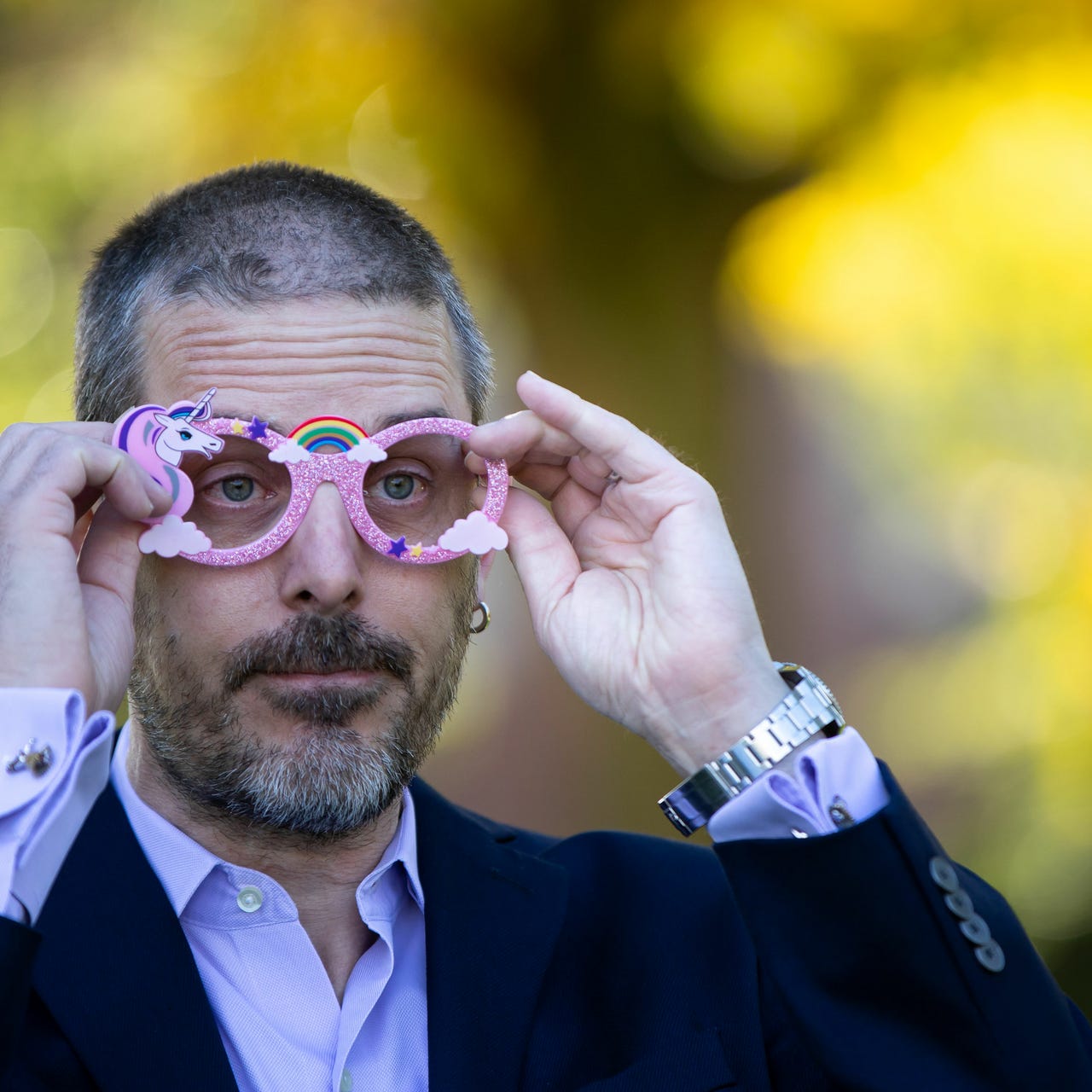
LinkedIn — Doan’s most active platform for connection, conversation, and sharing his work: search Doan Winkel
Thank You
A heartfelt thank you to Harry Hogg, Shah Huzaifa, Florence Acosta, Rachel Connor, Noelle Richards, and to Doan Winkel for his candor and courage. Showing up honestly — especially when you don’t have everything figured out — is the thing. Your presence and engagement make these conversations possible.
From This Conversation to Your Own
Doan’s story isn’t a recovery story in the traditional sense. It’s something more complicated and, for a lot of people in this community, more recognizable. The addiction didn’t disappear when the substance did. It found other places to live — productive ones, even admirable ones. But the cost was real.
That’s exactly why the work matters. Sobriety is one piece. What comes after — who you’re building, how you’re showing up, what you’re actually doing with the clarity you’ve earned — that’s where The Sober Creative Method™ picks up.
If you’re past the first question and into the harder one — not “should I stop?” but “what do I actually want my life to look like?” — that’s the 90-day work. We go through it together: Release → Create → Become.


