


Weekly Insight
Most people who drink to unwind describe it in terms of the drink. What they want is less noise. The replaying of the day, the list for tomorrow, the running commentary on everything they said in that meeting. A few drinks turn it down fast, and fast is hard to argue with.
The cost arrives the next morning. Sleep is lighter, the mind starts earlier and louder, and by late afternoon the noise is back with extra on top. So the drink gets reached for again, a little sooner.
Taking the drink away does not take the noise with it. People are often surprised by this. They expected sobriety to be calm, and the first evenings are loud in a new way, with nothing between them and it. That is usually the moment people decide it isn’t working.
What sobriety does is show you what the noise was made of the whole time. Usually it’s ordinary things: a decision you haven’t made, a conversation you’re putting off, a body that is tired. Each of those can be handled in a way a drink never handled it.
Here are some practices I try to work on consistently:
Walk. Ten thousand steps, outside when I can. The noise needs somewhere to go, and moving is the cheapest place I’ve found.
Sit and breathe. Twenty minutes of meditation. There is no way to stop the thoughts. I have to surrender. And watch them come and go.
Name the loud thing. I write down in one line what the noise is about. On paper it’s usually smaller than it was in my head.
Rest on purpose. A short nap, or ten minutes lying down with my eyes closed, even if I don’t sleep.
Change the ritual. Incense in the morning, along with green tea with ginger is my go-to. Iced cold cans of Spindrift (Lemon), the crack is still satisfying. The ritual stays, and the alcohol doesn’t.
Do something hard or new. When I used to want the lift a drink gave me, I look for it in a hard workout or learning something I couldn’t do last week.
Notice, then praise it. When the noise is up and I haven’t reached for a drink, I say so to myself. Recognize it, acknowledge it, move through it slowly.
This week, find the loudest hour of your day, notice the resistance and try to give it something better to do.
The Clear Hour is tomorrow

Tomorrow at 11am Eastern on Zoom. It’s free for subscribers.
Bring whatever you’re making. A draft, a sketch, a song, a plan, something you keep meaning to start. We arrive, everyone works, and we close.
It’s for people who want a place to create, and anyone is welcome.
If you’re in the UK, 11am Eastern is 4pm for you. Drop a line below if you are able to make it!
Podcast
Asa Anderson grew up around Brentwood and the Palisades.
He picked up the tenor saxophone in seventh grade and taught himself drums at 14. He studied jazz at USC and used cannabis and alcohol as his starting point for writing and performing, partly to ease stage fright.
A cannabis-induced psychosis in his early 20s and a bipolar diagnosis showed him that his brain did not mix well with substances. When he got sober, he worried he would be left flat. Four years in, he has more discernment, a clearer mind, and a new song out every six weeks.
Asa told me about the medication journey, which took a couple of years to get right, and the stigma he had to work through. We also got into Buddhist ideas about impermanence, The War of Art and The Artist’s Way, and why he treats music like going to the gym. His new single, Can’t Stay Numb, comes out November 6.
“It turned out that when I did get sober, I didn’t get any less creative.”
You can listen on Spotify and Apple Podcasts as well.
My guest this week is Noelle Richards on Wednesday at 3:00P EST
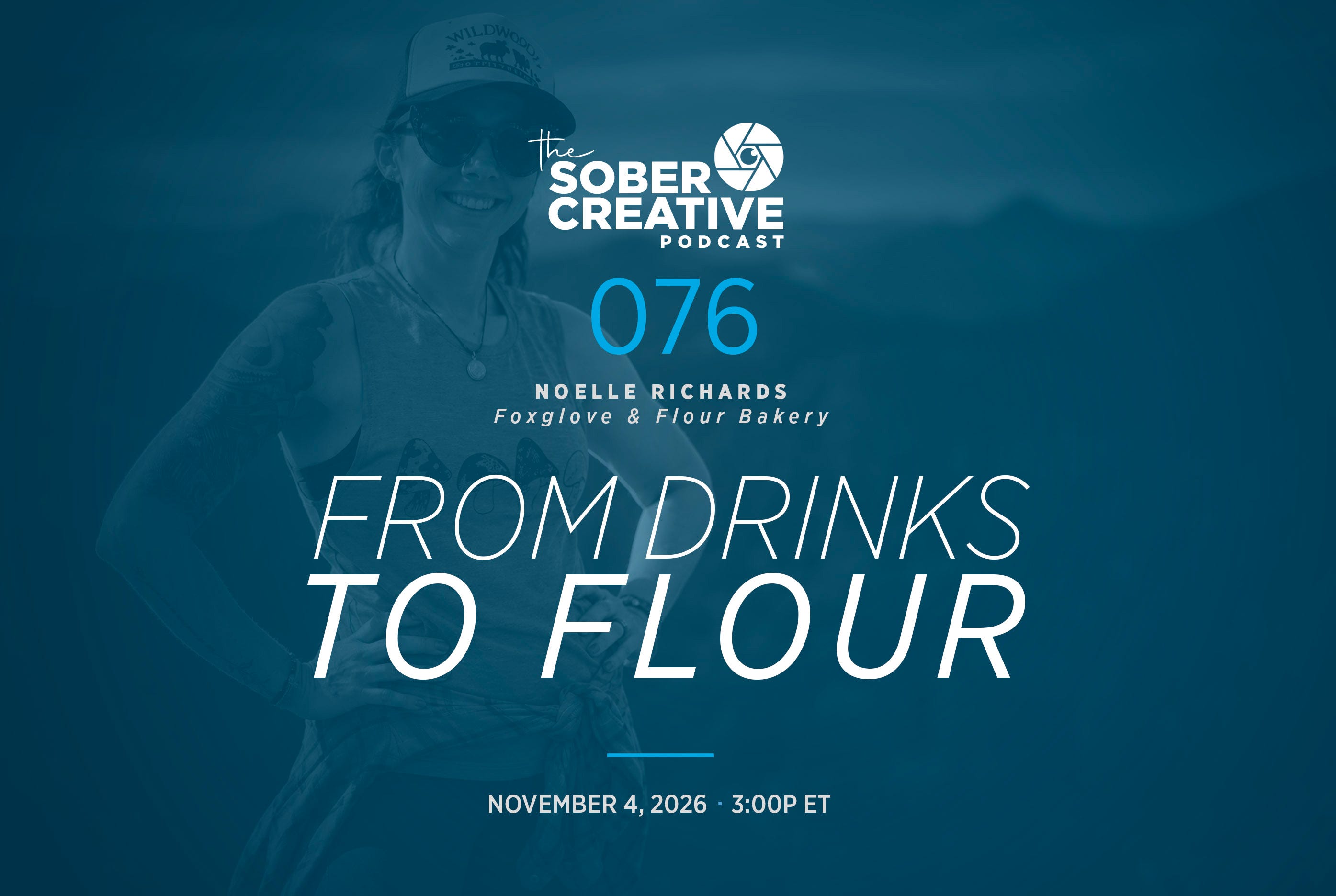
Six years ago, Noelle Richards changed how they ate, hoping it would help heal a body that had been struggling. It began as a decision about health, grew into a decision about animals, and eventually reached the way they drank. This month marks five years without alcohol.
Then came a move across the country to Portland, time spent around animal sanctuaries, and a bake sale that gave them a confidence they hadn’t felt before.
Today Noelle runs Foxglove & Flour, a cottage vegan bakery with preorder drops and market tables that sell out.
This week on The Sober Creative Podcast, I’m talking with Noelle about what becomes possible when your body and mind finally get the care they’ve been asking for.
What’s New
The noise will still be there on Day 1. It’s still here for me, six years in. Each morning gives you a small practice to meet it with: a breath, a short reflection, and one question.
Day 1 starts with what removing alcohol creates: space for quieter mornings, space between impulse and choice, space to notice what your system feels like when nothing is softening or dulling it. Day 3 is about the weight alcohol can be, along with the routines, expectations and ways of unwinding that come with it. Day 5 is about the pause between an urge and acting on it. Day 10 is the mind looking for familiar ground, which can show up as sugar, scrolling or staying busy. Day 13 is about learning which hours run hardest, like late afternoon, evenings and weekends.
By the end, you’ll have a month of practice at managing the volume, and you’ll know which hours of your day run loudest.