


Weekly Insight
Nobody hands you a trophy for getting through a slow week. There’s no ceremony for sitting with a bad mood until it passes on its own, or for staying present through an afternoon that has nothing in it worth remembering. That kind of day doesn’t make a good story later.
But it’s the only kind of day there really is, most of the time.
The dramatic ones are rare.
What you’re actually building your life out of is the plain stretch in between — paying attention to it instead of checking out, staying in the room even when the room is boring or hard or unclear.
That’s the whole practice.
Staying conscious for the parts nobody’s watching.
Essays
I nearly ran a red light talking about drinking

I had a rider last week, ready for the weekend, already talking through her Friday night — drinks at her girlfriend's, dinner, the whole thing. I told her what I do, sobriety coaching tucked in almost as an afterthought after the camera work and the businesses. She opened up about her industry, her family, the pressure to drink whenever she's home. I got so locked into the conversation I ran a red light and had to brake halfway into the intersection.
Podcast
Lisa Marie Simmons grew up in Boulder, adopted and then returned, adopted again, foster homes in between. She found her footing singing in a church choir, then moved to New York at 19 to study theater and music, working the club circuit at night. She calls those years wild. Cocaine, drinking, the whole tortured-artist package she’d bought into without really questioning it.
A job in the south of France pulled her out of that pace, though she didn’t fully rein it in until her 40s. She’s 60 now, living on Lake Garda in Italy with her husband, pianist Marco Cremaschini. Together they lead a neo-folk group called Hippie Tendencies and write for No Speak, a spoken word jazz project that’s played the Venice Biennale, the Jaipur Literature Festival, and Carnegie Hall. Her song “Shaping the Yet-to-Be” just won the John Lennon Songwriting Contest’s grand prize for best jazz song.
She told me straight away she isn’t sober. She’s cut back drastically, and what she notices most is energy — more of her left at the end of a workday. What we spent most of the conversation on was performing. She used to drink before every show, and she was honest about what that actually cost her: imprecise notes, a thick tongue, dried-out vocal cords. She’s replaced that pre-show ritual with meditation, tea, and sleep instead.
Some of her best songs feel like they came from somewhere else. She's just the vessel. And she can't hear them properly because alcohol closes off the antenna that let them in.
You can listen on Spotify and Apple Podcasts as well.
My guest this week is with Steve Munro 🇨🇦 on October 1 at 11:00A ET
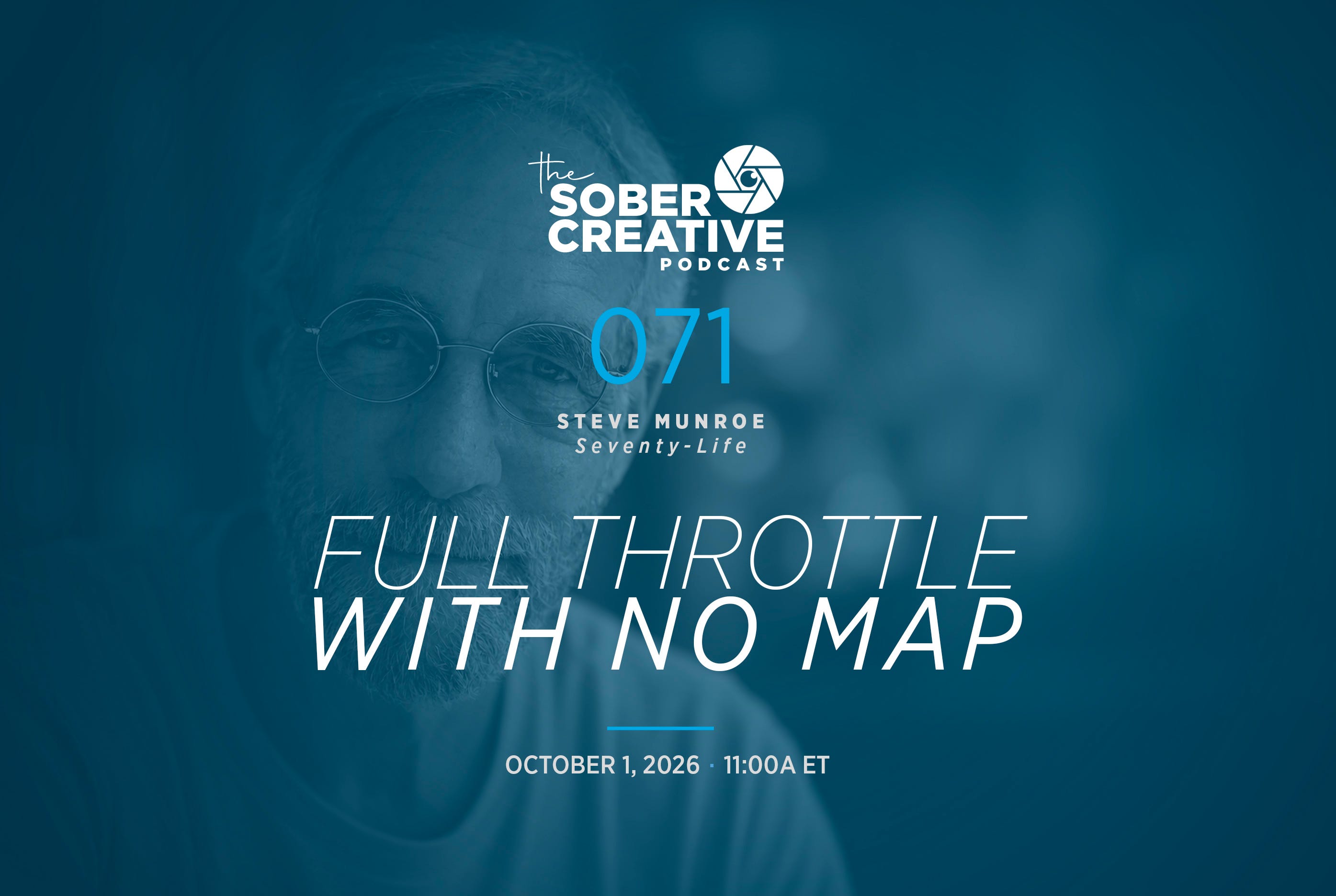
Steve drank and used for 25 years before he got sober. That was 33 years ago. He spent 11 months in residential treatment, and then he spent the rest of his life building things: software companies as an executive, businesses he started and sold, a return to frontline sales where he was still setting records in his sixties.
On the side, he races and builds vintage Italian motorcycles. Old Ducatis.
A few years into sobriety, the life he’d built started to overwhelm him. He calls it the Expansion Paradox — the tools that got you sober aren’t necessarily built for the bigger life sobriety hands you afterward. So he took what he’d learned managing attention and decision-making on a racetrack and turned it into something he calls the Seventy Framework.
He’s 71 now, living in rural Thailand, writing Seventy-Life on Substack.
We're going to talk about what happens when the sobriety toolkit that got you through the early years isn't built for the life that comes after.
Who I'm Celebrating
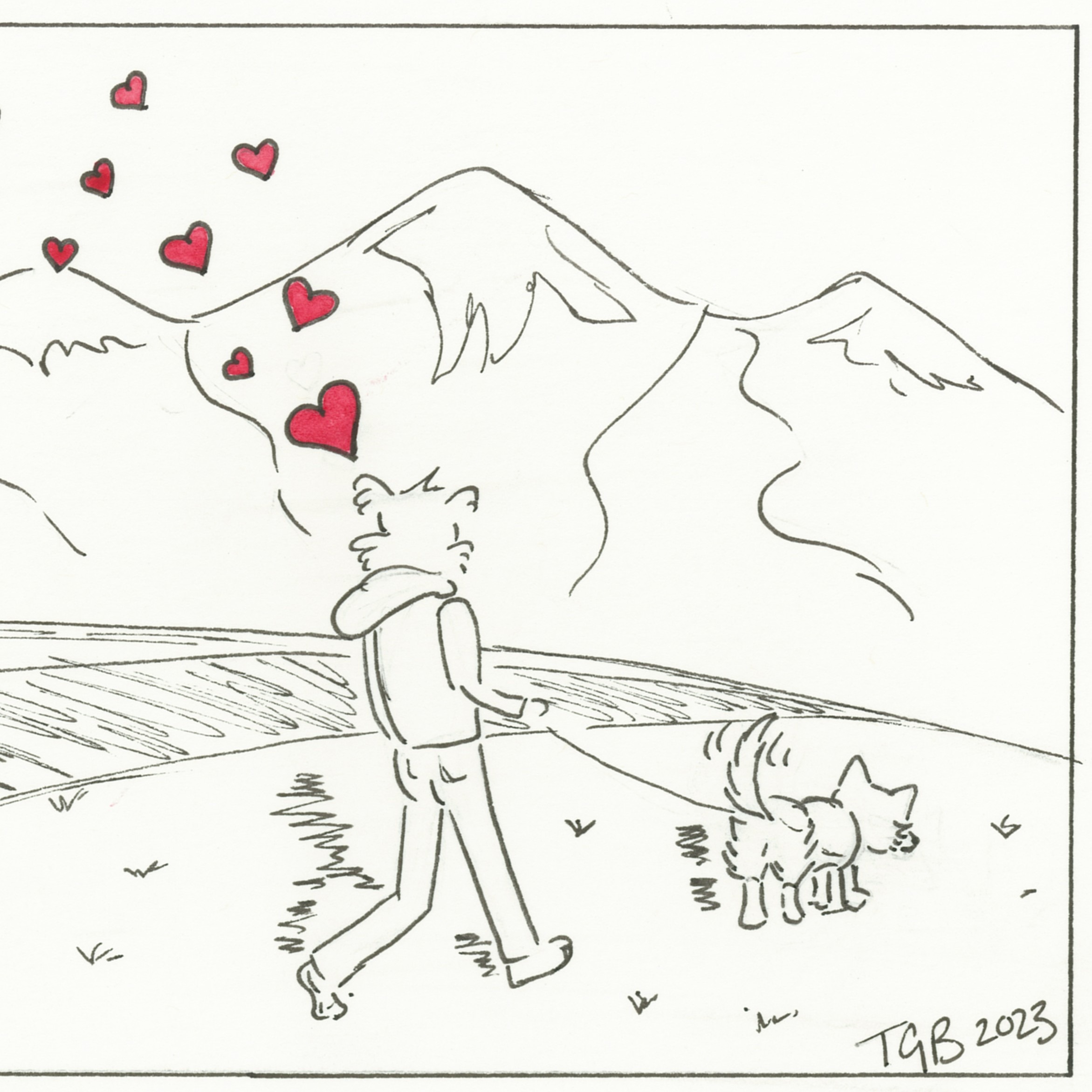
I had Tiffiny on my podcast a few weeks ago and she was kind enough to send me a copy of her book. It’s SO GOOD! Just look at the photos.


One of the early strips is called “Sober Saturday,” drawn about her first weekend not drinking. Just her and the dog, no plans, no one to explain herself to. She writes about how much she missed being included in the boozy brunch crowd the next morning, mourning the version of herself everyone knew as the fun one, even while admitting what those mornings actually looked like: hungover, sick, faking it through breakfast just to feel normal again. Her husband used to joke she only rented her breakfasts back.
What I love about what she's doing here is she makes it relatable and funny while still telling the honest version of what happened.
The book: The Graphical Bear: Expressing the Feels Through Art
What I’m Creating
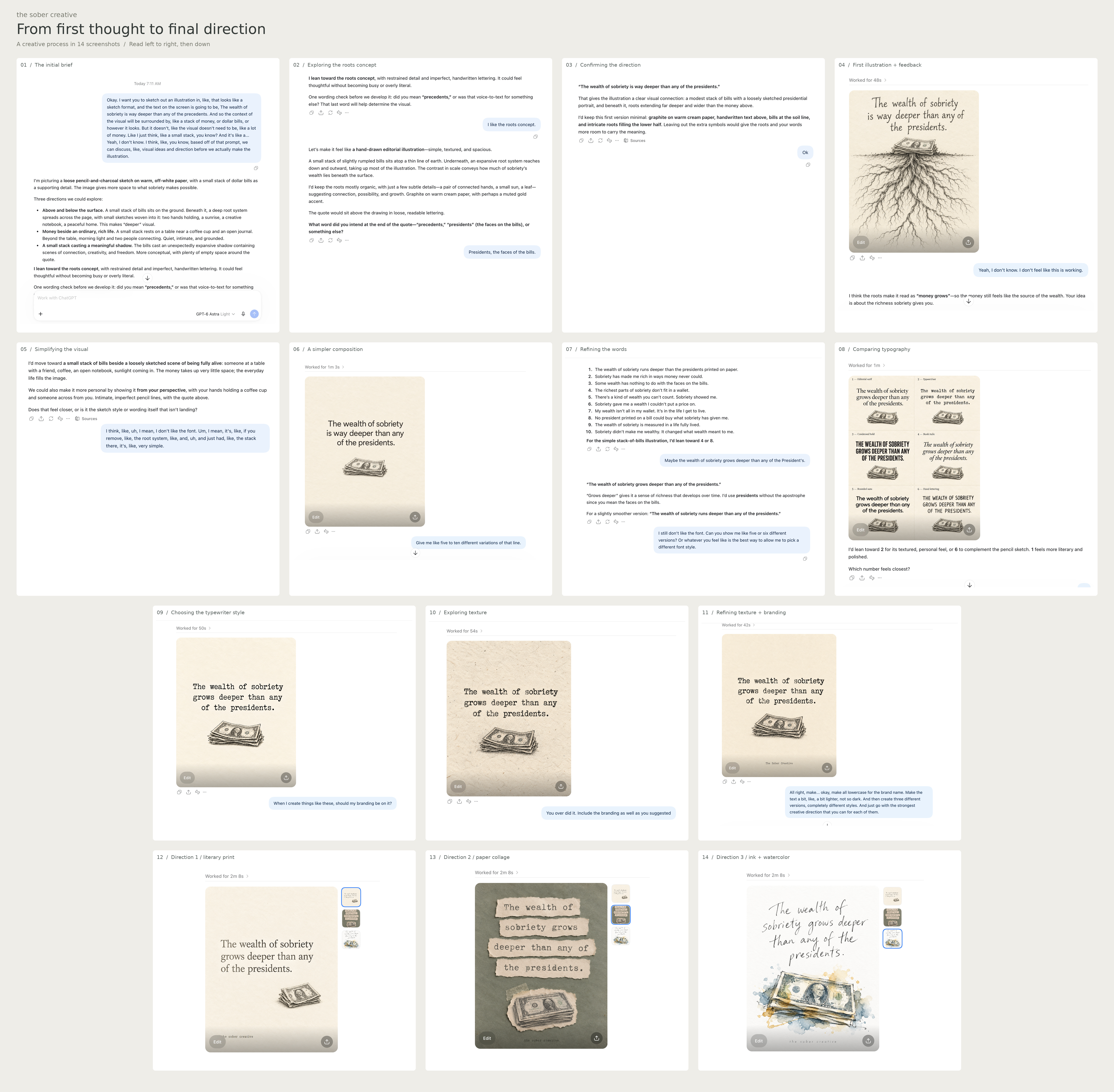
Here’s a look into my process of using AI, from idea to execution.
The first sketch, the wrong direction (roots that made it read like sobriety just grows money), the wording changes, the font comparisons, to the three finished versions I ended up choosing between. I chose the watercolor version because it felt more tied into “creative.”
It’s less a design tutorial and more what it looks like to use one of these tools as a collaborator.
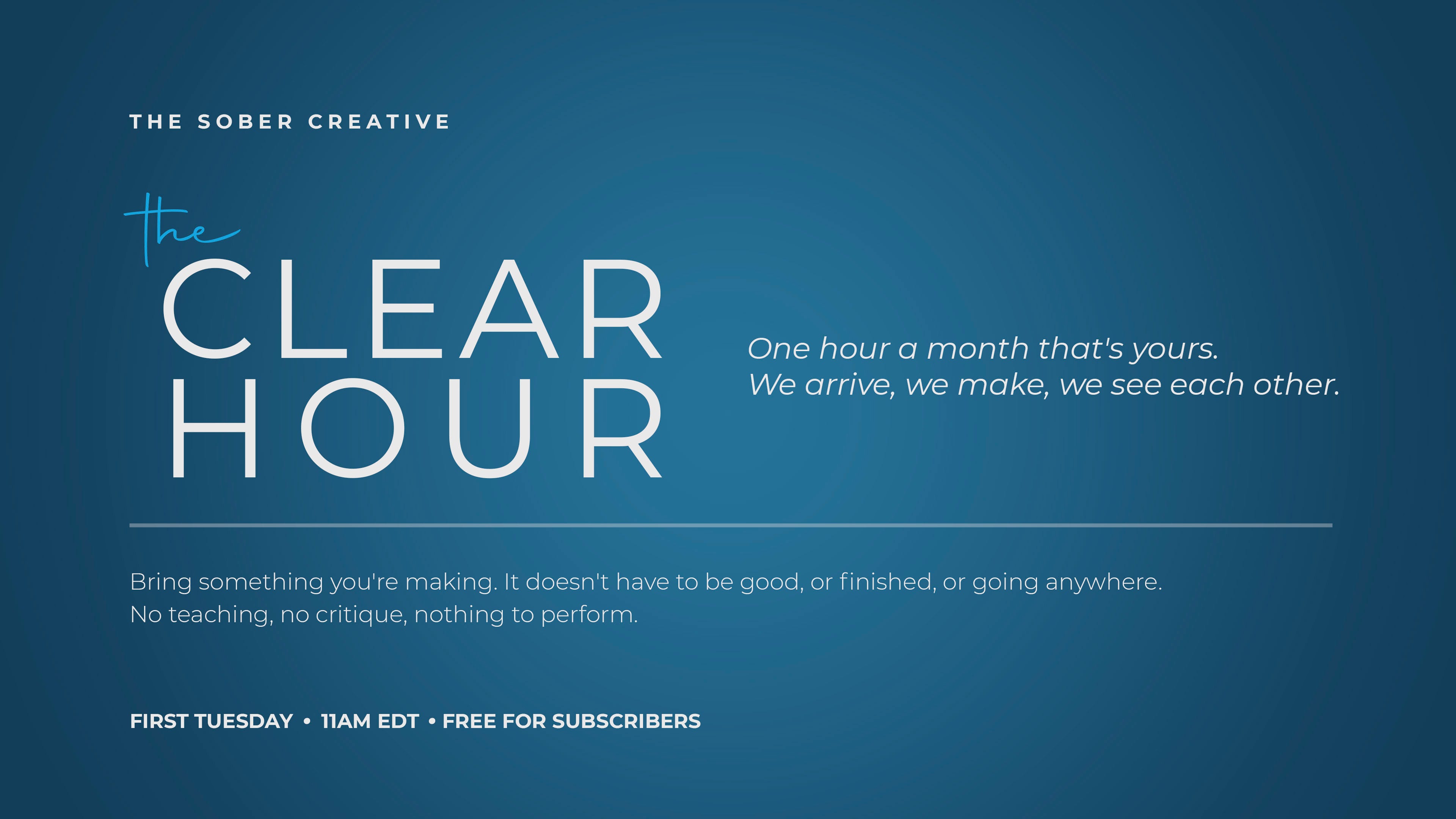
The Clear Hour is next week, Tuesday, October 6, 11am ET. Free for subscribers. No agenda, nothing to sell. Just an hour to work on whatever you’re making. If you plan on being there, let me know.
Everything you are doing here is so rich and vibrant!!! Love it, Josh!