


Weekly Insight
Denial is cheap and it works immediately. It hands you an alibi. You round the number down. You point at the guy at the table who had more. You call it a hard week, and the week before that was hard too, and so was the one before that. Nothing has to be admitted today. Nothing has to change today. That’s the whole appeal.
What it doesn’t advertise is the interest. The bill arrives slowly, in mornings you can’t fully account for, in promises to yourself that carry less weight every time you make one, in conversations you learn to steer away from. An alibi has to keep getting revised to stay usable. Each revision is small enough to justify on its own, and after enough years you’ve lost track of what the first version even said.
The people close to you usually see it before you do. They just don’t have a way in, because keeping the door shut is the entire job.
Radical honesty runs the other direction. It costs everything up front. You drop the alibi and say the true sentence out loud, in a room, to someone, and there’s no taking it back. That’s a bad afternoon. Sometimes a bad month.
It’s also the only thing that makes acceptance possible. Acceptance needs a true picture to work with, and you can’t get one while you’re still negotiating the details. Once you have it, the maintenance stops. You’re not tracking which version you told to whom. The problem is still sitting there, at its actual size instead of the size you’d talked it down to. Actual size is workable.
Almost six years in, here’s what I’d tell anyone still running the numbers. Both options cost you. Only one of them keeps charging.
Podcast
Hunter Biden is a painter, writer, and founding partner of Peak Path Health who’s been substance free and sober since June 2019.
He was three years old when the car accident happened. He and his older brother were pulled out with the jaws of life. His mother and little sister didn’t survive. His family rebuilt around that loss with so much love that Hunter still describes his childhood as beautiful, even while calling it a childhood filled with trauma. He remembers his first drink at eight, a stolen sip at a party that made him feel, for a moment, like everything missing in him had been filled.
The drinking followed him through college and Yale Law School, and by his early thirties he knew it wasn’t normal. He made himself promises he couldn’t keep, only on weekends, only beer, and broke every one of them. Hiding those broken promises built into a shame that locked him into a cycle: rehab at 33, close to seven years sober, a relapse, and then a ten-year spiral that ended in a two-year addiction to crack cocaine and daily heavy drinking.
The thing that finally broke the cycle wasn’t another stint in treatment. It was losing everything. A stolen laptop put twenty years of his private life in front of the world with no context, and the total loss of privacy left him with what he calls a binary choice: get up and live, or find a way to die. He calls it the most humiliating, devastating, and destructive thing that ever happened to him, and also the greatest gift, because it left him with nothing left to hide and nothing left to fear. His wife Melissa saw every part of him during that collapse and stayed. She’s the one who bought him his first paintbrush from a used furniture shop.
He hasn’t stopped painting since, hundreds of canvases deep. He writes about all of it on Substack, and says he hears from readers almost every day telling him it got them through something hard. He’s now building Peak Path Health, a recovery organization focused on the care people need after the first 30 days of treatment, when relapse rates are highest and most programs stop paying attention.
You can listen on Spotify and Apple Podcasts as well.
My guest this week is with Erin Gregory on August 20 at 12:30P EDT
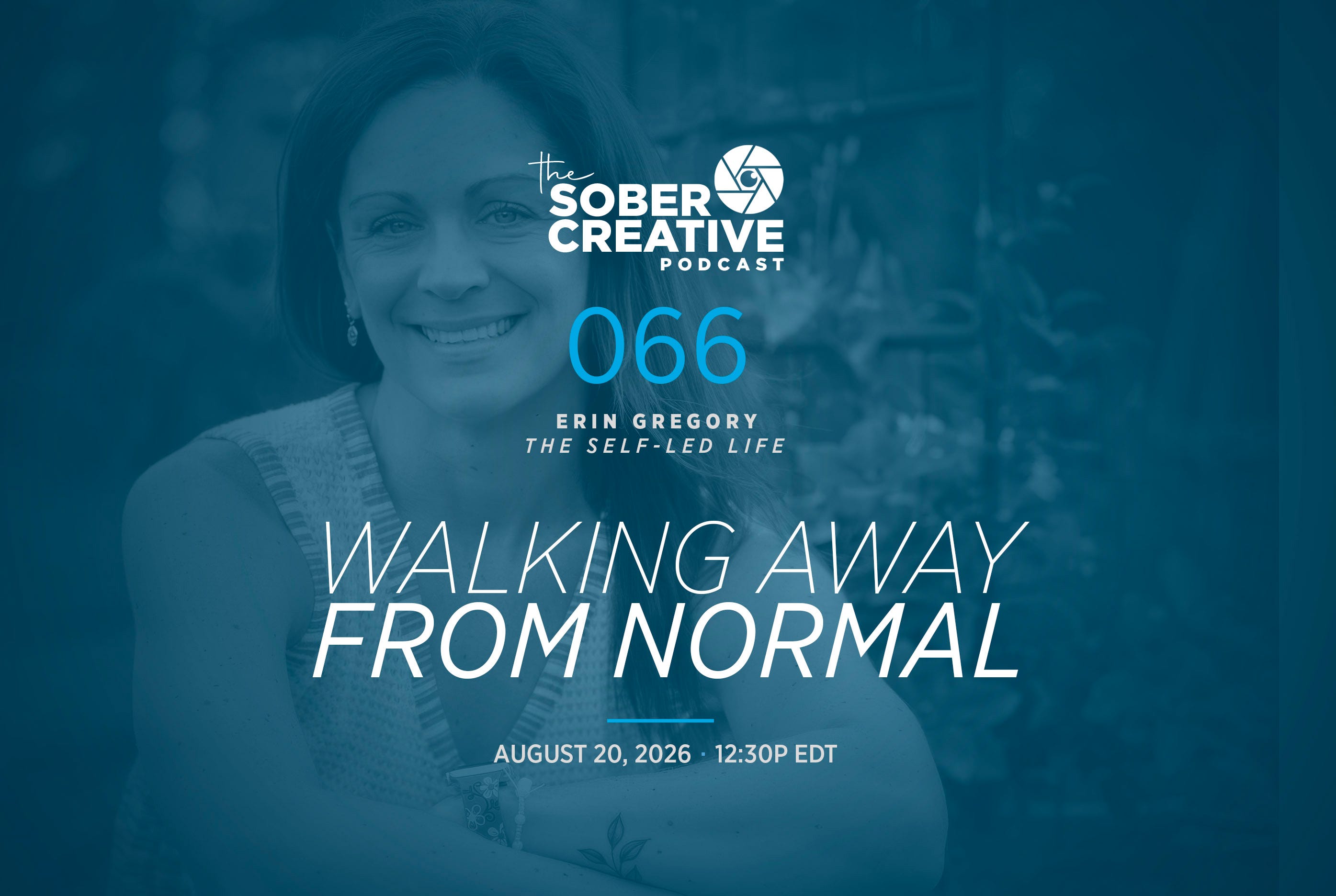
My next guest is Erin Gregory, founder of Erin Gregory Creative and the writer behind The Self-Led Life.
Her father-in-law died in 2018. Her husband Mike couldn’t put the grief down, and Erin was holding him up along with three kids, two jobs, and a house that never stopped needing something.
They both grew up in families where a beer after work and wine at dinner was simply what you did. Casual, constant, unquestioned. So when the grief settled in, they did what they knew. One drink led to two, and the guilt that followed weighed more than whatever the drinking was covering.
Mike put it down first. Erin watched him get healthier, clearer, more sure of where he was headed, and decided she wanted the same. That meant facing the mess instead of taking the edge off it.
The rest of the country went the other way. That March, liquor sales jumped more than 50% in a single week. Heavy drinking rose about 20% between 2018 and 2020 and stayed up for years. By 2025, Gallup had the share of Americans who drink down to 54%, the lowest in nearly ninety years of asking.
Erin and Mike were early to something a lot of people are only now arriving at. We will get into what opened up once the guilt was gone, why she puts alcohol, fast food, and cigarettes in the same category, and how she’s raising three daughters who can tell when an ad is selling to them.

What I’m Creating
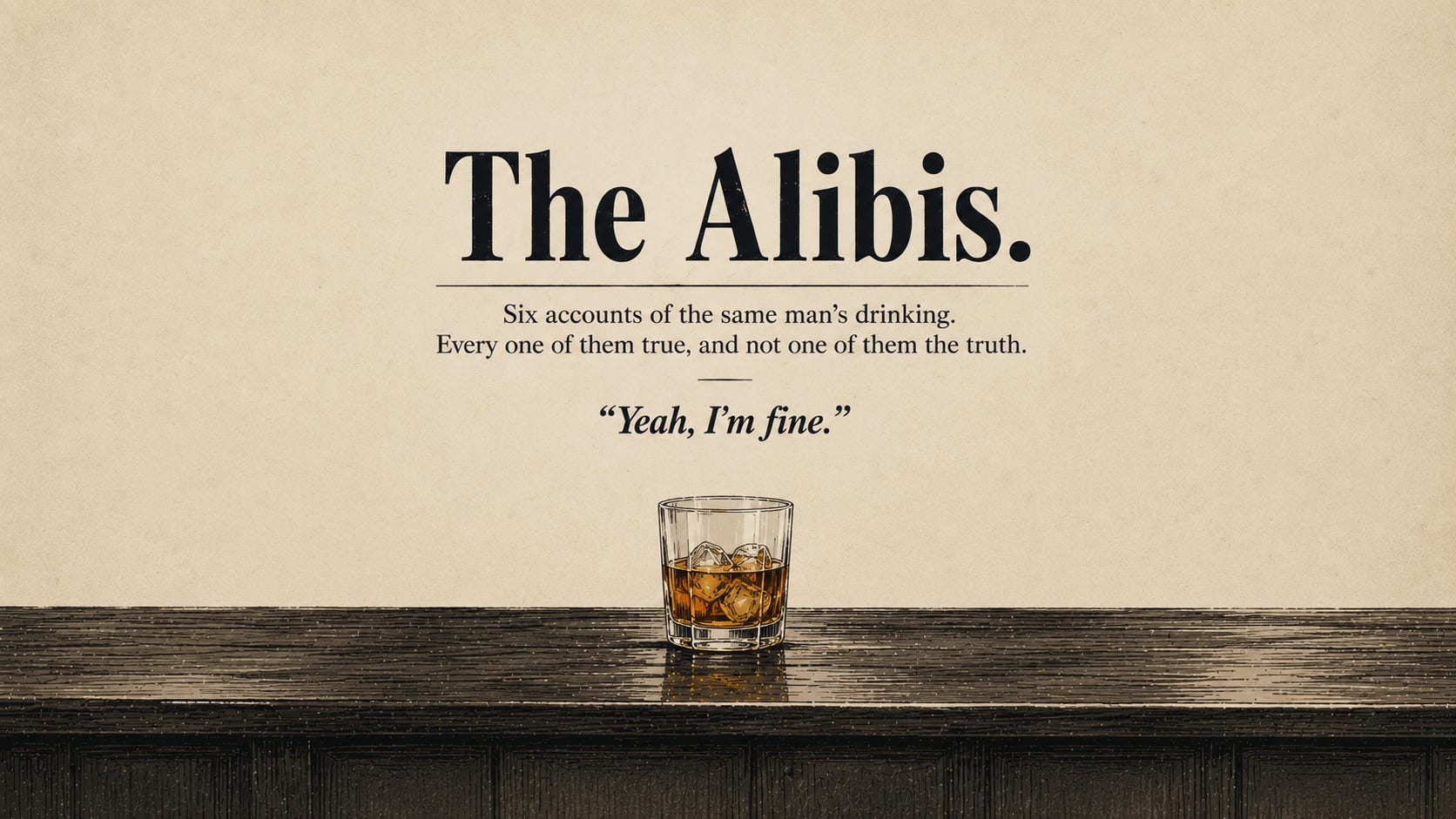
I’m working on a new piece this week called The Alibis.
Six illustrated panels, one a day, starting tomorrow.
Same man, same bar, six accounts of his own drinking. Every one of them true. Not one of them the truth.
It's about why denial is so comfortable that it can run for years without you ever catching it, what it takes from you while it's working, and what it cost me to put mine down.
There's a seventh and that one's saved for essay.
The essay comes next Sunday.