


✨Weekly Insight
Not in anger. Not in collapse. In the quiet, clear-eyed moment when you realize the life you’ve been managing isn’t the life you actually want.
Most of us spend years building coping mechanisms we mistake for character. The armor becomes so familiar we forget it was ever armor at all. Until something shifts — a diagnosis, a milestone, a single painting session, a conversation — and you catch a glimpse of who you might be without it.
That’s the beginning. Not the end of something, but the opening of it. And once you see it, you can’t unsee it.
🎙️Clear Conversations: Creative Minds in Sobriety
This past week, I sat down with Justin Donaldson, a landscape painter who travels the United States full-time in a camper with his family, painting the country one location at a time. Not as a vacation. As a life.
Justin grew up in a cult. That’s not a dramatic framing—it’s just the fact. A highly religious, highly controlled environment where substances of any kind weren’t part of the picture. For most of his life, he never touched anything. Then he finally got out, built a career as an artist, watched his Instagram following explode from 400 to 40,000 followers in a single month, and started making real money for the first time. And that’s when his body said: Okay. You’re safe now. We need to deal with your stuff.
He was diagnosed with PTSD. Couldn’t work. Had to hire someone full-time to keep his business afloat while he tried to figure out how to function. He’d spent years emotionally shut down—rage outbursts, shutting people out, unable to really receive what his wife or kids were trying to give him. He’d survived by staying locked up inside himself. Now that the survival pressure was gone, everything he’d locked away came flooding up.
He tried therapy. It was slow. Because of how shut down he was, he couldn’t access the parts of himself he needed to move forward. So he researched, and he came to cannabis and psilocybin—terrified of both, given how he was raised. But he used them intentionally, alongside serious therapeutic work, because they did something therapy alone couldn’t: they expanded his capacity to hold difficult emotions without shutting down. When the fear got too big and he would have normally closed off, he could hold it instead. Sit with it. Let it move through.
He spent roughly a year and a half doing that work. Then something shifted. He stopped becoming reactive to everything. The rage quieted. He could listen to his wife. He could receive his kids. And at some point, he realized he didn’t need the substances anymore—not as a moral stance, but because he’d built the actual capacity to do the emotional work himself. He could feel something hard, sit with it, and let it resolve. The scaffolding had done its job. He no longer needed it.
He’s now been substance-free for about two years. He doesn’t drink because it makes his body feel terrible. He doesn’t use cannabis because the situations that used to overwhelm him simply don’t anymore. As he put it: he can’t paint well on drugs anyway.
And the painting—this is where his story gets beautiful. Justin made a decision somewhere along the way to stop doing digital work that took him 40 hours a piece and start going outside with gouache and watercolor, committing to whatever happened in an hour or two, and then moving on. Plein air painting forced something out of his head and into his gut. He describes it as a merciless surrender—you sit down with a location, you have no idea what’s going to come out, and you paint it anyway. Some paintings are magic. Some are terrible. He makes a lot of both.
He talks about his practice as a three-way conversation: between himself, his subject, and the painting. You have to be the author with intention and the audience with fresh eyes—simultaneously. Without intention you don’t know when to start. Without reception you don’t know when to stop. When those three things converge, he says, that’s when it starts to feel like something real is happening.
What strikes me most about Justin is that his path through trauma and into clear-headed living isn’t a recovery story in the traditional sense. He’s not sober because alcohol destroyed his life. He’s clear because he did the work—genuinely hard, uncomfortable, sometimes terrifying inner work—and found that once the work was done, he simply didn’t need anything to cope with anymore. The coping mechanism becomes unnecessary when you’ve actually healed the wound.
He’s out there right now, somewhere in New Mexico, painting boulders in a place called the City of Rocks, his family in a camper nearby, chasing what he calls an impossible goal. And driving toward impossible goals, he says, is just fascinating.
You can listen on Spotify and Apple Podcasts as well:
My Next Guest on🎙️Clear Conversations
Episode 041 with Jocelyn Ulevicus on February 12 at 3p EST
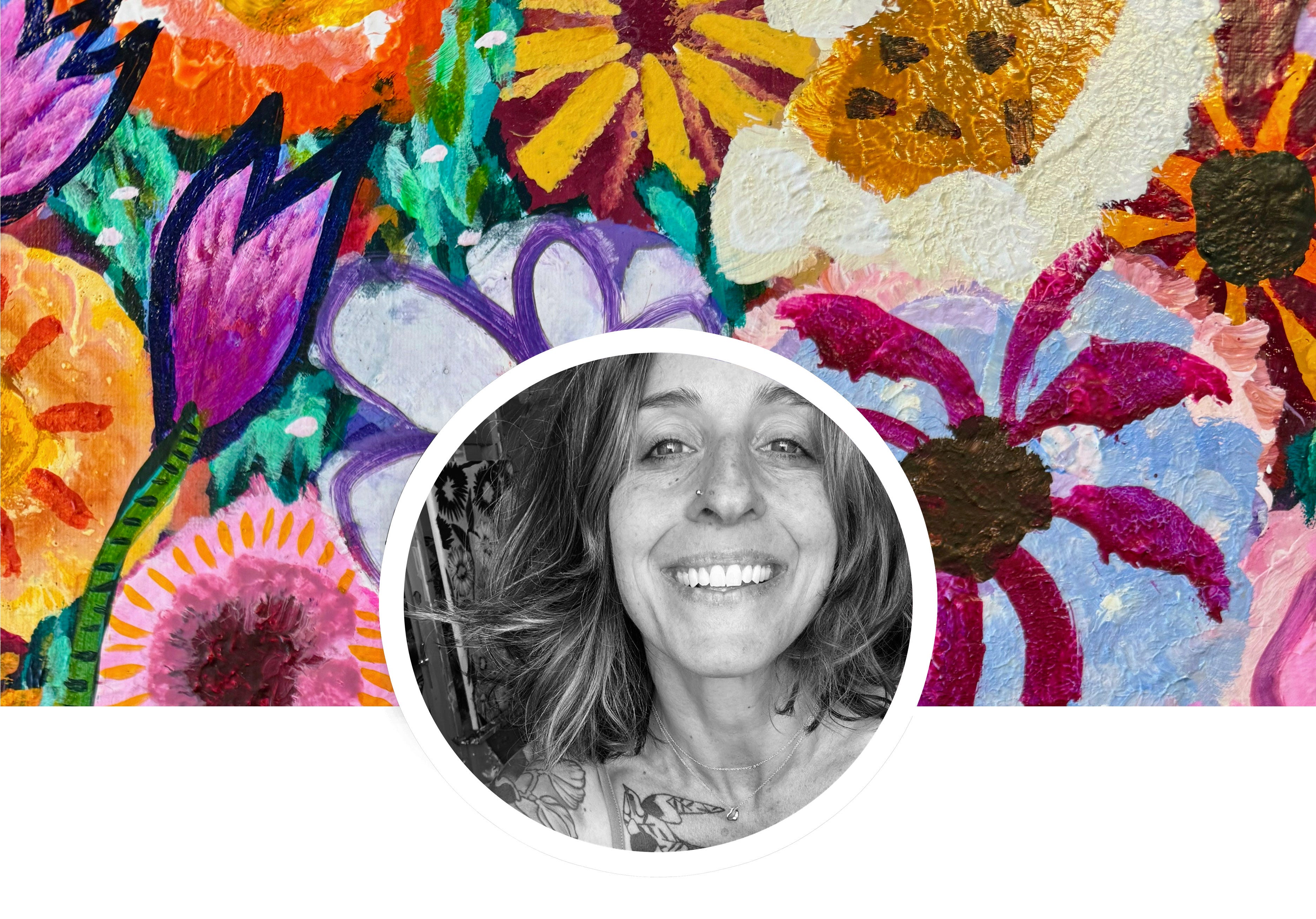
What does it look like to circle something for years before fully stepping into it?
My next guest has been doing exactly that — living close to sobriety, collecting clear days, noticing what comes back when the blur lifts. Jocelyn Ulevicus is an American artist, writer, and creative mentor living in Paris, and her Substack, The Living Canvas, is where she writes her way through the messy, beautiful work of becoming who she actually is.
She traces the link between alcohol and the struggling artist story she'd been carrying, the survival reflex that kept her just below the surface of fully living, and what it feels like to finally choose a life that belongs to her.
This week we talk about creativity as a spiritual practice, what presence costs and what it gives back, and why the most courageous thing you can do might be to stop running from yourself.
🎉 What I’m Celebrating
I became a founding builder of the Substack Unconference recently — and I want to tell you why.
Phil Powis ❤️⚡️ and Carolina Wilke are doing something I’ve never seen before. They’re building a four-day gathering in Montreal for independent creators — not a conference with sponsor banners and lanyard culture, but an actual gathering of people who do this work. And they’re building the whole thing in the open, letting the community shape what it becomes before it goes public.
This line though: “You can have thousands of people reading your words every week and still feel like you’re doing it completely alone.”

That’s the thing nobody says out loud. But every one of us who creates independently knows that feeling. The post lands. The comment hits. And there’s nobody in the room who actually gets it.
That’s the problem they’re solving. And the way they’re solving it — transparently, in community, without corporate polish — is exactly how I’d want it built.
I became a Founding Builder because I believe in what this can be. And because Phil and Carolina are two of the most service-oriented people I’ve been fortunate enough to call my coaches.
The founding builder window is still open and I invite you to join us, it’s going to be special.
🎬 Behind the Scenes
One of my 1:1 members recently received her custom-made pottery piece. She is an art medicine practitioner. I did a bit of research on my end to find this hand symbol that means: protection, healing, and strength.
I’ve been fortunate in that my work has allowed me to integrate all of my being. I’ve been into pottery for about a year now and the practice itself is spacious, slow, intentional. It’s a beautiful way to share something meaningful I’ve created with my hands.
Sober Social Club has grown to about 33 members so far! Hearing from people directly in that there are not enough choices for meet ups that do not involve drinking has me feeling really great about creating this. Our next event at the end of the month is going to be at SMASH Raleigh for a night of non-alcoholic fun with table tennis, electric darts, and electric shuffleboard.

I had a big celebration this past week and had the idea of doing a giveaway. One person would receive my full Sober Creative Method 90 Day Transformation Package and one person would receive a custom-made piece of pottery. The giveaway has closed and I’ll be reaching out to the winners over the next few days. There were over 20 submissions and it got me thinking. This is important work and I want everyone who showed up to have an opportunity. I’ll be offering something special for those who don’t win as well.
Two thousand days in, I still believe the same thing I did on day one: clarity isn't a sacrifice. It's a return.
If you're wondering what your life looks like on the other side of the blur, the Sober Creative Method™ might be the place to start.